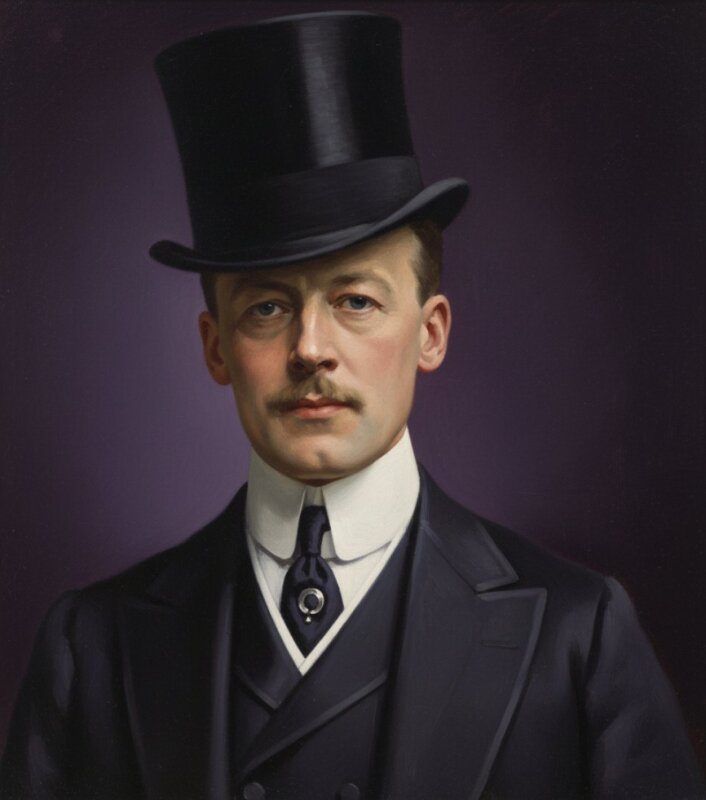
Leopold Berchtold
“I served a cautious court—and sent the note that made caution impossible.”
I was born in Vienna in 1863 into a house with roots in Moravia and Hungary, raised in the habits of the court: restraint, procedure, and the quiet labor of files. The diplomatic service suited such temper. Postings in Europe culminated in my ambassadorship to St. Petersburg (1906–1911), where, in the long shadow of 1905 and the Bosnian annexation crisis, I studied Russia’s nerves as well as our own.
After Aehrenthal’s death, Emperor Franz Joseph made me Minister of Foreign Affairs in 1912. The Balkan wars tested us. I sought to check Serbian enlargement and preserve a workable equilibrium by urging recognition of an independent Albania. Through the European Concert and the London Conference of Ambassadors, I pressed arrangements that barred Serbia from the Adriatic, a temporary settlement that satisfied few but kept the powder dry a little longer.
Sarajevo in June 1914 ended that reprieve. Convinced the Monarchy’s cohesion was at issue, I urged a severe note to Belgrade and oversaw the July ultimatum—terms stringent enough to demand obedience at real cost. Serbia’s reply withheld full compliance. On 28 July I guided the declaration of war, believing firmness essential and still hoping for a local confinement. The alliances replied more swiftly than prudence.
Thereafter came the Italian question. I opposed sweeping territorial concessions to buy neutrality; others thought differently. Under strain I resigned in January 1915. Later, under Emperor Charles, I served in senior court posts, but policy no longer rested in my hands.
Related characters
Otto von Bismarck
I banned socialists yet built their insurance, sparked wars to found an empire, then spent nineteen years keeping Europe quiet—ask what I feared most.
Start the conversation
Alfred von Schlieffen
I never commanded in 1914, yet my rail tables marched armies through Belgium—and my 'right wing' became a legend.
Start the conversation
Raymond Poincaré
I asked France for three years in uniform, then spent four guarding her Constitution through a war I did not choose.
Start the conversation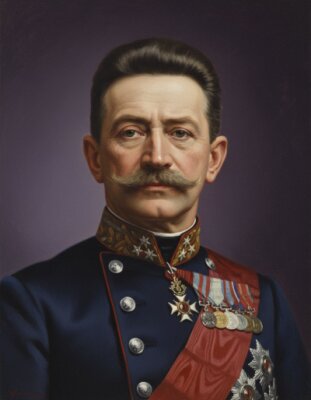
Conrad von Hötzendorf
I demanded preventive war—then watched the war I urged consume the army I had prepared.
Start the conversation