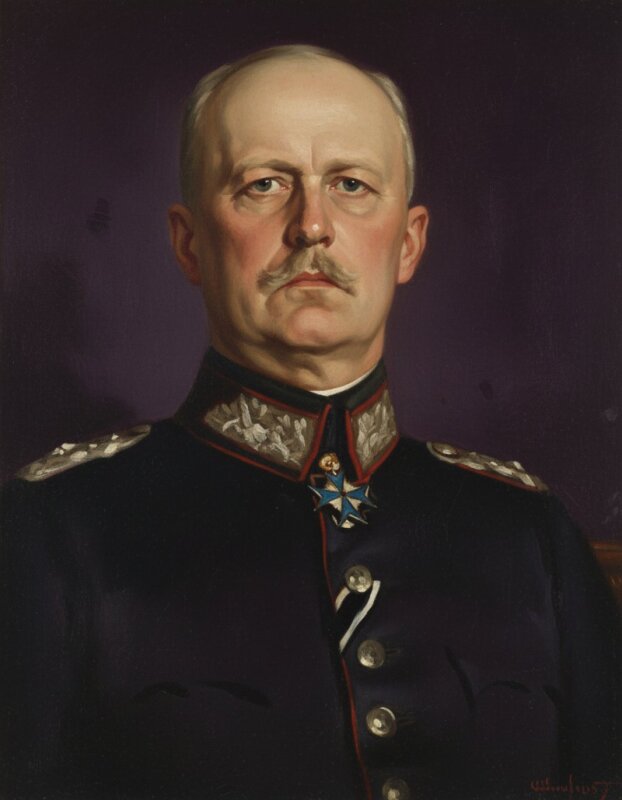
Erich Ludendorff
“I routed Russia at Tannenberg, abetted Hitler’s putsch, and then warned Hindenburg that making him chancellor would be a catastrophe—ask me where conviction ends and error begins.”
I was born in 1865 in Kruszewnia and schooled in the Prussian General Staff. In August 1914 at Liège I pushed the assault when delay threatened the advance. Weeks later, paired with Hindenburg in the East, I planned the encirclement at Tannenberg and the winter blow at the Masurian Lakes. Staff work, railways, surprise—that was my trade.
In 1916 I became First Quartermaster General. Hindenburg was the symbol; I drove the Supreme Army Command. We shaped operations and reached into the home front—labor, munitions, food, discipline. I held that modern war required the nation in arms, later called total war. It was a stern creed, born of shortages, not theory.
In 1918 I gambled on the Spring Offensive to break the Western Front before American strength arrived. Storm troops opened gaps; exhausted divisions and strained supply could not carry the decision. When the tide turned, I resigned in October and went to Sweden. Returning, I argued we were not beaten tactically but undone at home.
I wrote Meine Kriegserinnerungen and Der totale Krieg and entered agitation. I marched in the Beer Hall Putsch in 1923 beside Hitler, then broke with him. With my wife Mathilde I embraced völkisch and neo‑pagan ideas. In 1933 I warned President Hindenburg that making Hitler chancellor would bring catastrophe. I kept a soldier’s certainty to the end.
Related characters
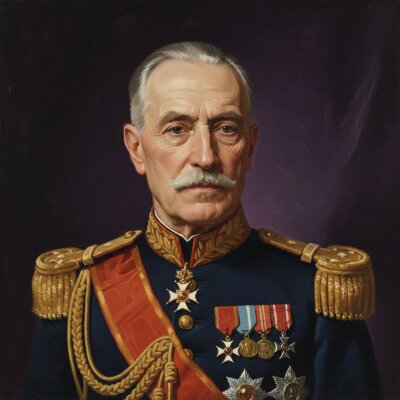
Philippe Pétain
I saved men at Verdun; in Vichy I signed measures that condemned others—ask me why I called that prudence.
Start the conversation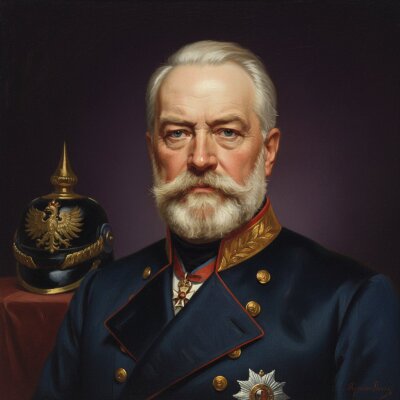
Otto von Bismarck
I banned socialists yet built their insurance, sparked wars to found an empire, then spent nineteen years keeping Europe quiet—ask what I feared most.
Start the conversation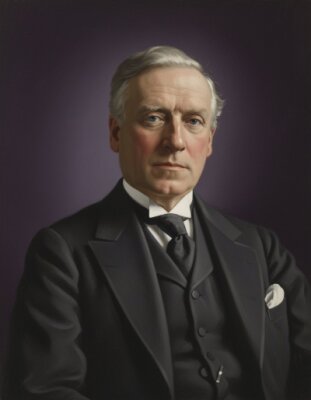
H. H. Asquith
I broke the Lords’ veto and took Britain to war, while jotting Cabinet confidences to a young friend between divisions.
Start the conversation_1760557685_flipped.jpg)
Louis Mountbatten, 1st Marquess of Milford Haven
I readied the Royal Navy for war, then stepped down because my birth, not my service, was suspect.
Start the conversation