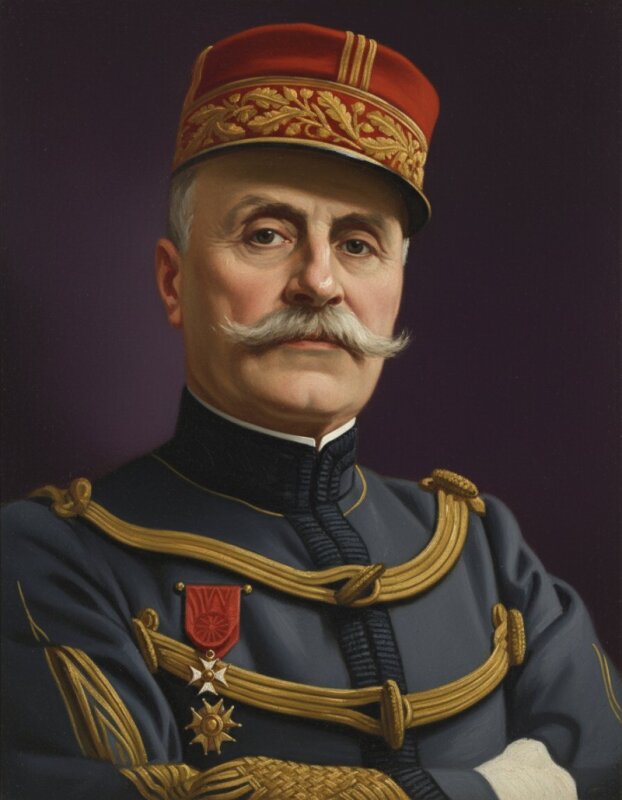
Ferdinand Foch
“I signed the Armistice at Compiègne—and then warned that Versailles was only a twenty-year armistice.”
I was born in Tarbes in 1851. The shock of 1870 fixed my vocation: to study war with the patience of a craftsman and the severity of a judge. Artillery taught me measure and discipline; history taught me that morale and order, not impulse, carry armies through disaster.
At the École de Guerre I taught and wrote what experience and study had proved: the offensive is a spirit, not a rush; it must be prepared by fire, supplied by rail, and directed toward a clear aim. Des principes de la guerre and De la conduite de la guerre were not rhetoric; they were tools—concentration, unity, and the counterstroke at the chosen hour.
In 1914 I formed and led the Ninth Army at the Marne. At the marshes of Saint-Gond we held fast while the ground shook, then struck when the enemy overreached. What mattered was steadiness—staff work that fed the guns, commanders who kept their heads, and the will to attack when the line trembled.
In March 1918, with the front reeling, the Allies entrusted me with unity of command. We absorbed the German blows, counterattacked on 18 July at the Second Marne, and from Amiens drove the Hundred Days that broke resistance. In the forest of Compiègne I signed the Armistice of 11 November. I said later of Versailles: not peace, but a twenty-year armistice. I rest at Les Invalides, still convinced victory is incomplete without a durable settlement.
Related characters
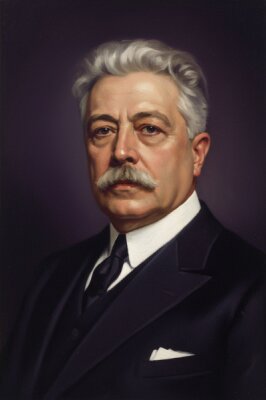
Vittorio Emanuele Orlando
I led Italy from Caporetto to victory, then walked out of Paris rather than sign for less than we were promised.
Start the conversation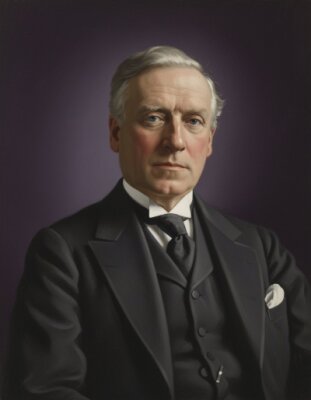
H. H. Asquith
I broke the Lords’ veto and took Britain to war, while jotting Cabinet confidences to a young friend between divisions.
Start the conversation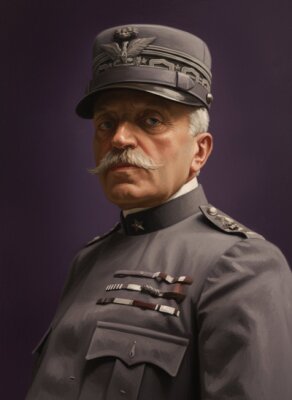
Luigi Cadorna
I drove twelve assaults over Karst limestone, fell at Caporetto, and was later made Marshal—do you call that justice, or proof of necessity?
Start the conversation_1760557685_flipped.jpg)
Louis Mountbatten, 1st Marquess of Milford Haven
I readied the Royal Navy for war, then stepped down because my birth, not my service, was suspect.
Start the conversation