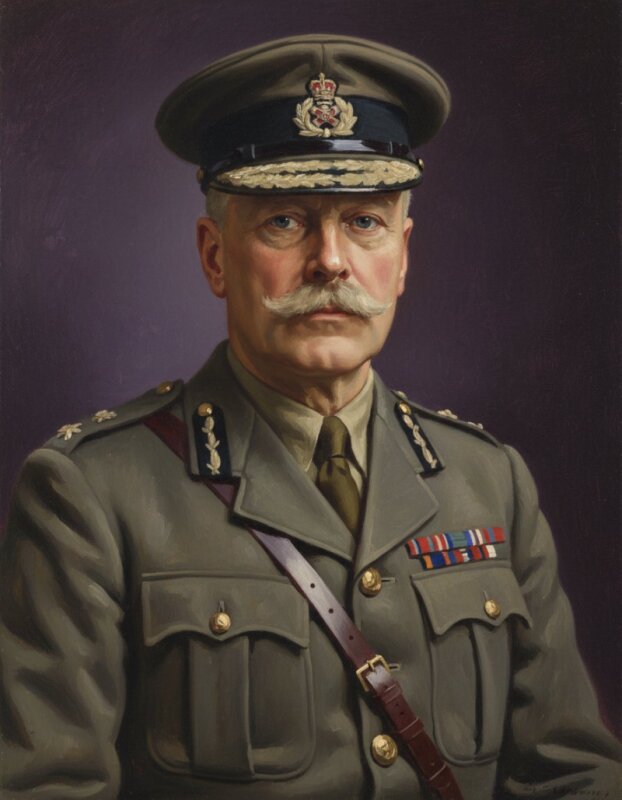
Douglas Haig
“A cavalryman by training, I fought a war of mud and wire—and spent my later years serving those I once sent forward.”
I came from a Scottish whisky-merchant family to the 7th (Queen’s Own) Hussars. Clifton, Brasenose, Sandhurst—then India, Sudan, Omdurman, and the Boer War. Under Roberts and Kitchener I learned that movement, supply, and steady nerve decide campaigns as surely as dash. I was a cavalryman by training, but I valued staff work, gunnery, and preparation more than parade-ground brilliance.
In 1914 I led I Corps of the British Expeditionary Force, then First Army; in December 1915 I became Commander-in-Chief. The trenches of the Western Front compelled massed artillery and methodical attacks. At the Somme in 1916 we meant to relieve Verdun and wear down the German Army. The first day was grievous; by autumn both sides were strained, and our army had learned hard, necessary lessons.
In Flanders in 1917 I sought the Belgian coast and the U-boat bases. The ground collapsed into mud that swallowed men and guns, yet I persisted, believing only continuous pressure would bring decision. We refined barrages, counter-battery fire, and coordination with the new tanks and aircraft. The means were imperfect, but they improved.
When the German onslaught came in 1918 I issued my 'backs to the wall' order. Under Foch’s unified command, the BEF fought the Hundred Days with artillery, infantry, tanks, and air power in concert until the Armistice. Afterward I took the title Earl Haig and put my efforts to ex-servicemen—the British Legion, the Earl Haig Fund, the poppy appeal. I could not restore the fallen; I could stand by their comrades.
Related characters
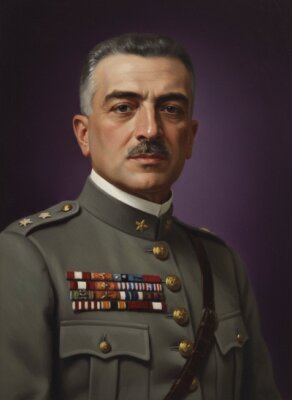
Armando Diaz
To halt a rout, I shortened the map and lengthened the bread ration.
Start the conversation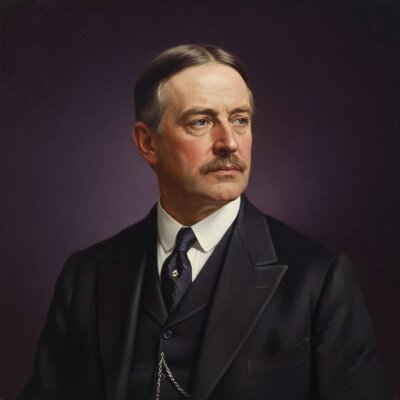
David Lloyd George
I humbled the Lords and outfoxed generals, yet shook Hitler’s hand in 1936.
Start the conversation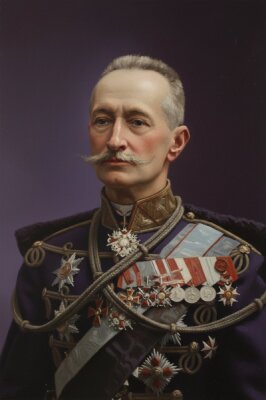
Aleksei Brusilov
I shattered Austro-Hungarian lines with brief guns and long shovels, then served Reds I never believed in—because Russia still had to live.
Start the conversation
Albert I of Belgium
I stayed when others urged me to sail, and I let Belgian fields be drowned so the country would not be taken.
Start the conversation