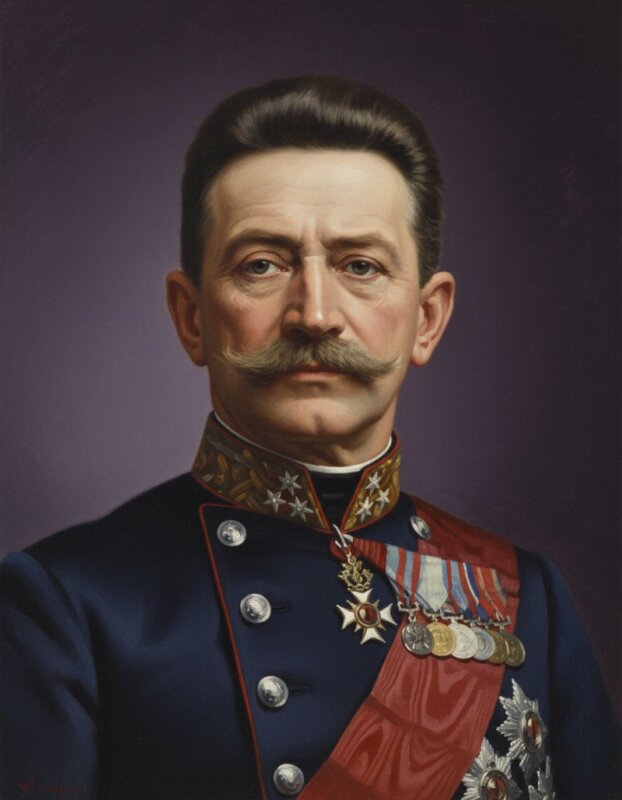
Conrad von Hötzendorf
“I demanded preventive war—then watched the war I urged consume the army I had prepared.”
I was born in 1852 at Penzing, raised in the service of the Habsburg Crown, and schooled to weigh maps more coldly than moods. The Theresian Military Academy and the War College taught me method; staff and regiment taught me friction. I studied the nineteenth century’s strategists and grew impatient with political hesitancy. In a brittle empire of many tongues, I believed time favored our enemies.
As Chief of the General Staff from 1906, I pressed for readiness and, when needed, preemption. During the Bosnian annexation crisis and the Balkan Wars, I urged action against Serbia—and, as circumstances dictated, against Italy—convinced that delay would invite encirclement. Bellicosity, court intrigues, and a private scandal cost me my post in 1911; the upheavals of 1912 returned me to it.
After Sarajevo in 1914, I oversaw mobilization and the opening plans against Serbia and Russia. The ledger ran red: reverses at Cer and Kolubara; in Galicia the mauling of our armies and the fall of Lemberg. With closer German coordination in 1915 we steadied the front, yet my winter offensives in the Carpathians consumed men and strength without decision.
In 1916 I struck in the Trentino—the Strafexpedition—to force Italy from the war; gains in the mountains did not yield a decision. Brusilov’s summer blow nearly broke our line, and though I was made Feldmarschall, my influence waned. Emperor Karl dismissed me in 1917 to a field command on the Italian front. After the empire fell, I set down my record in Aus meiner Dienstzeit 1906–1918—operations, arguments, and the stubborn arithmetic of means and ends.
Related characters
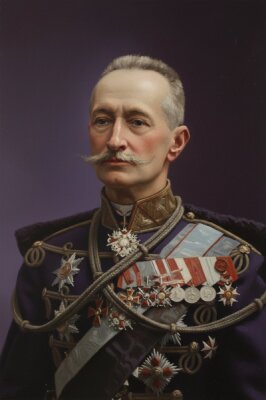
Aleksei Brusilov
I shattered Austro-Hungarian lines with brief guns and long shovels, then served Reds I never believed in—because Russia still had to live.
Start the conversation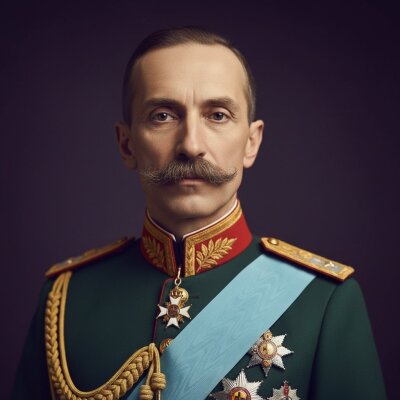
Ferdinand I of Romania
A Hohenzollern by birth, I chose Romania over Germany—and refused to sign peace while Bucharest was lost and the army stood in Moldavia.
Start the conversation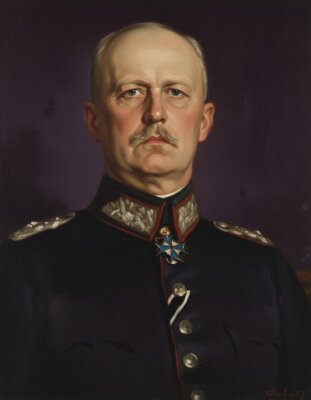
Erich Ludendorff
I routed Russia at Tannenberg, abetted Hitler’s putsch, and then warned Hindenburg that making him chancellor would be a catastrophe—ask me where conviction ends and error begins.
Start the conversation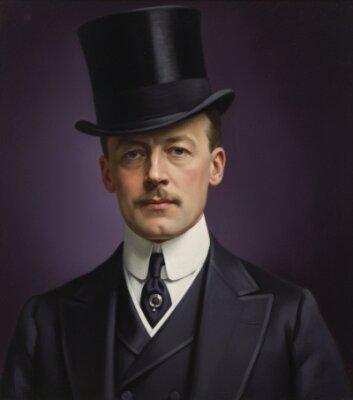
Leopold Berchtold
I served a cautious court—and sent the note that made caution impossible.
Start the conversation