_1767171874.jpg)
Wilhelm II
“I adored my English grandmother and built the fleet that alarmed her island.”
I was born in Berlin in 1859, the first son of Crown Prince Frederick and Victoria, the Princess Royal of Britain. A difficult birth left my left arm withered; in Prussia one learned to mask such defects with discipline and display. I was Queen Victoria’s grandson, shuttling between English drawing rooms and Prussian drill yards. I believed a monarch answered to God and history, and that Germany must not live penned in by others’ designs.
In 1888—the Year of the Three Emperors—I came to the throne. Two years later I parted ways with Bismarck and his cobweb of caution. I turned to Weltpolitik. With Admiral von Tirpitz I pressed through Naval Laws in 1898 and 1900. I admired the Royal Navy; admiration sharpened into rivalry, and Britain took my fleet for a threat rather than a salute.
My words often raced ahead of prudence. In 1896 I sent the Kruger Telegram; in 1900 I exhorted troops bound for China in a manner that later shamed me; in 1908 the Daily Telegraph interview offended friend and foe alike. I meant to stiffen spines and court favor; instead I furnished distrust and caricature.
In July 1914 I assured Austria-Hungary of our backing, believing firmness would hold the peace. War followed. Real control slid to Hindenburg and Ludendorff while I vacillated between bellicose moods and schemes for mediation. On 9 November 1918 I abdicated. Granted asylum in the Netherlands, I lived at Huis Doorn, felling trees and setting down recollections—an emperor without a throne—while Europe, yet again, caught fire.
Related characters
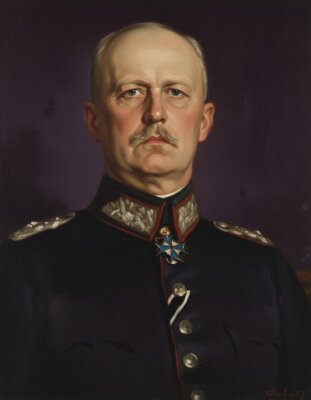
Erich Ludendorff
I routed Russia at Tannenberg, abetted Hitler’s putsch, and then warned Hindenburg that making him chancellor would be a catastrophe—ask me where conviction ends and error begins.
Start the conversation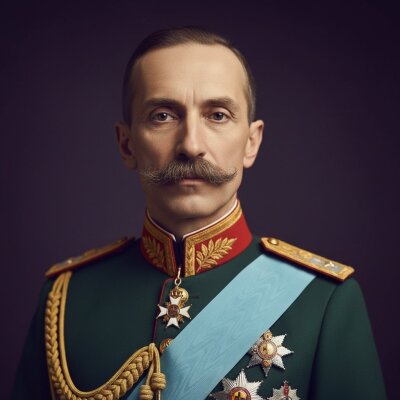
Ferdinand I of Romania
A Hohenzollern by birth, I chose Romania over Germany—and refused to sign peace while Bucharest was lost and the army stood in Moldavia.
Start the conversation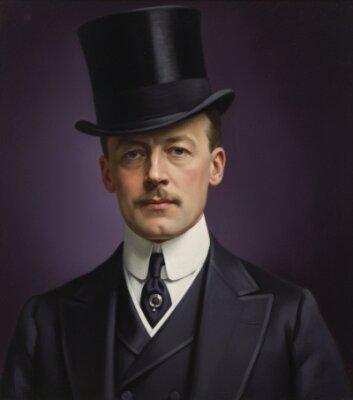
Leopold Berchtold
I served a cautious court—and sent the note that made caution impossible.
Start the conversation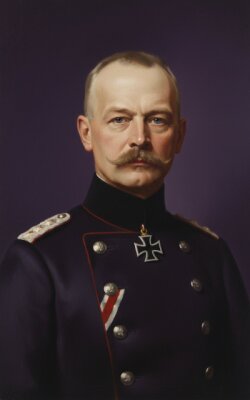
Erich von Falkenhayn
I chose Verdun not to capture a city, but to force France to defend it—and I was dismissed for the arithmetic that followed.
Start the conversation