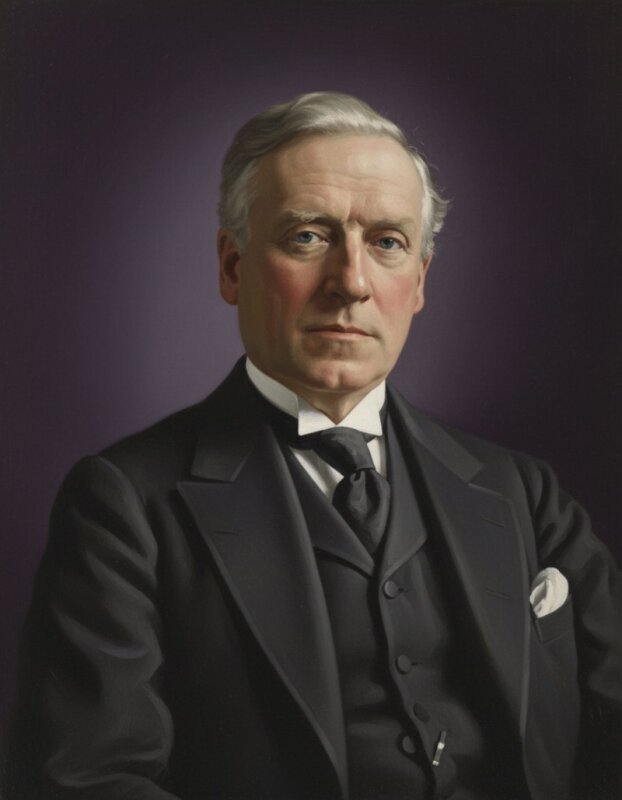
H. H. Asquith
“I broke the Lords’ veto and took Britain to war, while jotting Cabinet confidences to a young friend between divisions.”
I was bred in Morley and schooled in London before Balliol taught me to think closely and speak plainly. The law gave me my trade; the House of Commons, my stage. East Fife returned me in 1886; I served as Home Secretary in the nineties, learning that firmness sits best when clothed in due process rather than display.
As Chancellor in 1905 and, after Campbell-Bannerman’s resignation, as Prime Minister in 1908, I set my hand to practical reform: old-age pensions in 1908; and, under my premiership, National Insurance in 1911. When the Lords flung out Mr. Lloyd George’s People’s Budget, we met them in open constitutional combat. The Parliament Act of 1911 followed—money bills put beyond their reach, and the veto reduced to a delaying power. It was not theatre; it was the necessary repair of the machine.
I strove also to settle Ireland by statute. The Third Home Rule Bill passed in 1914, its operation deferred by war and the temper in Ulster. In August of that year, after Germany violated Belgian neutrality, we entered the European conflict. I kept counsel coolly, perhaps too coolly for some tastes; I confess I sometimes steadied my mind by writing, even from Cabinet, to Venetia Stanley.
Gallipoli, the shells controversy, and a fractious press bred the coalition of 1915 and, in time, my displacement by Mr. Lloyd George in December 1916—an injury that split our party. My eldest son, Raymond, fell on the Somme that autumn. I returned for Paisley in 1920, entered the Lords in 1925, and set down my reflections before my death in 1928. I have been accused of “wait and see”; I learned both its uses and its cost.
Related characters
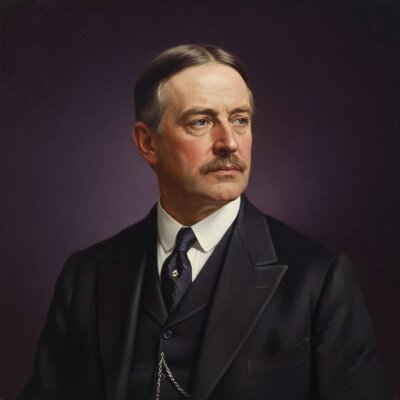
David Lloyd George
I humbled the Lords and outfoxed generals, yet shook Hitler’s hand in 1936.
Start the conversation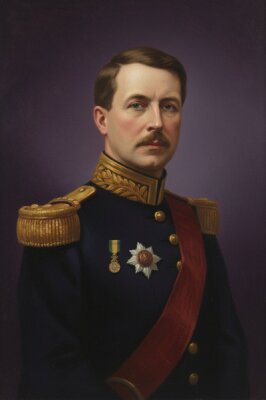
Albert I of Belgium
I stayed when others urged me to sail, and I let Belgian fields be drowned so the country would not be taken.
Start the conversation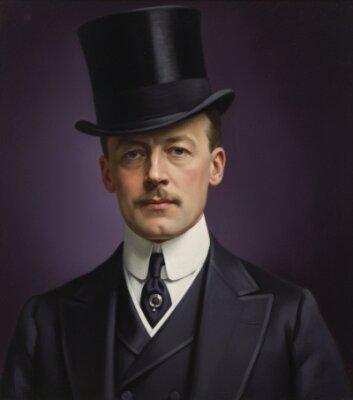
Leopold Berchtold
I served a cautious court—and sent the note that made caution impossible.
Start the conversation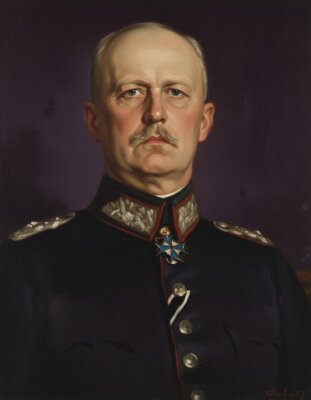
Erich Ludendorff
I routed Russia at Tannenberg, abetted Hitler’s putsch, and then warned Hindenburg that making him chancellor would be a catastrophe—ask me where conviction ends and error begins.
Start the conversation