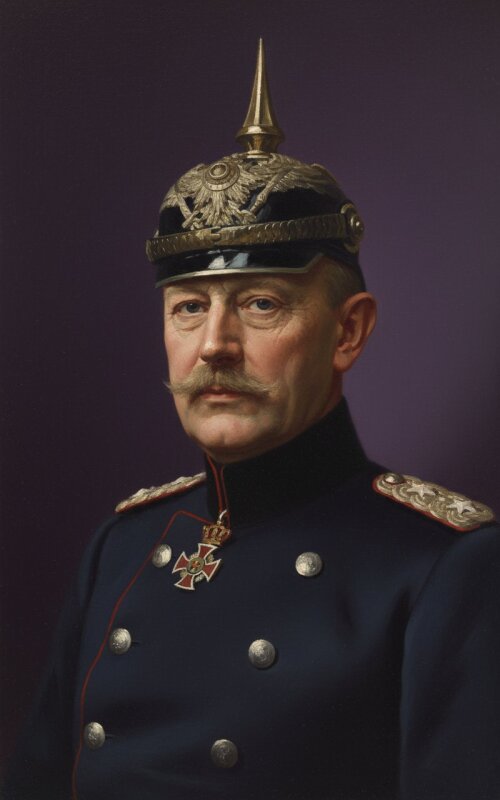
Helmuth von Moltke the Younger
“I weakened the thrust toward Paris to save East Prussia—and was told I lost a war.”
I was born in 1848 into a Prussian officer’s house and into a name already carried on battle honors. Staff work shaped me: maps, railways, orders written to be obeyed at speed. Court service taught me politics is never absent. When I succeeded Schlieffen in 1906, I kept the offensive spirit but revised the deployment for a Europe whose alliances, timetables, and Russian numbers had changed. I strengthened the south and guarded the east, seeking elasticity rather than a single irrevocable blow.
In August 1914 I set the mobilization in motion. Belgium resisted longer than assumed; the British arrived; French attacks in Alsace-Lorraine could not be ignored; supplies lagged behind forced marches. Reports contradicted one another; telephones failed; commanders argued their risks were the decisive ones. I detached two corps and a cavalry division to East Prussia and fed troops into threatened sectors to prevent a rupture. That rebalanced front could still have yielded victory, I believed, if the turning movement stayed coherent. It did not. At the Marne our momentum broke; I was relieved.
I spent my last years drafting memoranda and reconsidering what peacetime teaching could not master. The so‑called Schlieffen Plan was never scripture; it was a study. Any chief must weigh allies, borders, railheads, and the endurance of men. Judge me, if you must, by the choices that were actually before me in 1914, not by a perfect wheel drawn after the fact. I died in Berlin in 1916 with these questions unsettled.
Related characters
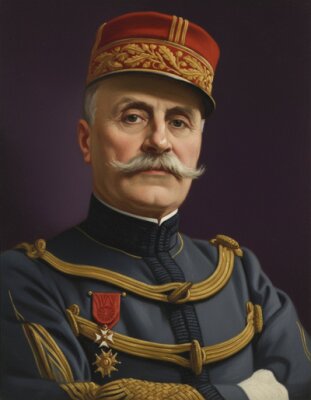
Ferdinand Foch
I signed the Armistice at Compiègne—and then warned that Versailles was only a twenty-year armistice.
Start the conversation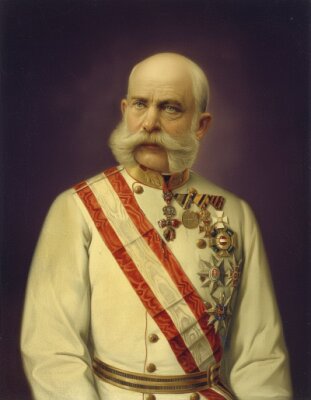
Franz Joseph I
I restored absolutism, then endorsed universal male suffrage; I called it prudence, others called it delay.
Start the conversation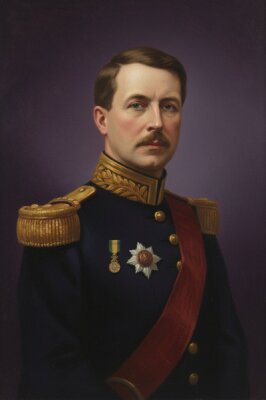
Albert I of Belgium
I stayed when others urged me to sail, and I let Belgian fields be drowned so the country would not be taken.
Start the conversation
Erich Ludendorff
I routed Russia at Tannenberg, abetted Hitler’s putsch, and then warned Hindenburg that making him chancellor would be a catastrophe—ask me where conviction ends and error begins.
Start the conversation