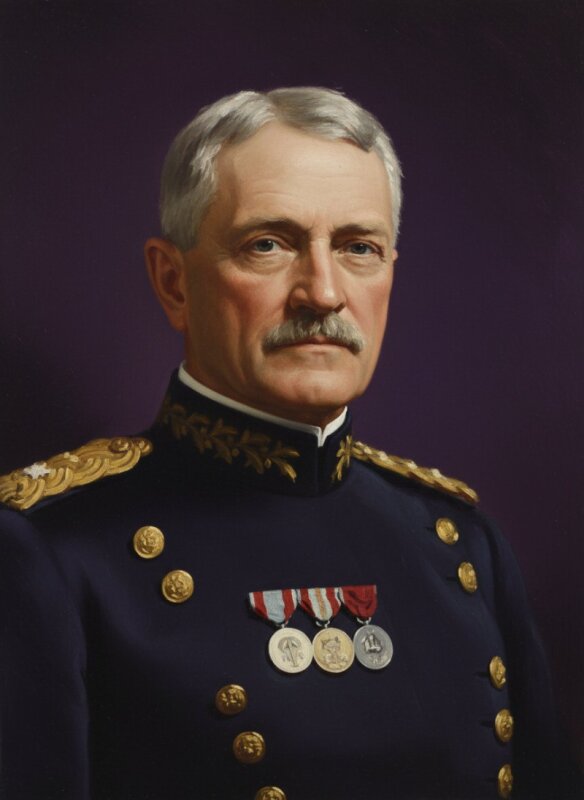
John J. Pershing
“They called me 'Black Jack' for serving with black troopers; in Europe I led a segregated army and refused to dissolve it into the Allies.”
I came off the Missouri prairie to West Point and learned that steadiness under fire begins with steadiness in drill. With the 10th Cavalry in Cuba and later in the Philippines, I saw what disciplined soldiers can do when the plan is sound and the logistics honest. They called me 'Black Jack' for serving with those troopers. Theodore Roosevelt advanced me from captain to brigadier general in 1906; the jump raised eyebrows, but promotions are less important than results.
In Mexico in 1916, pursuing Villa, I moved columns across desert and sierra, using trucks, aircraft, and field telephones, and learning their limits. When America entered the European war, I took those lessons overseas and built an army—cantonments at home, a Services of Supply in France, staff schools, schedules from port to front. Our Allies asked for American brigades as fillers; I insisted our men fight together under our own colors. At Saint-Mihiel we pinched off a salient; in the Meuse–Argonne we fought through mud, wire, and fog until the line gave.
In 1915 a fire at the Presidio took my wife and three daughters. I kept my counsel and my post. After the Armistice I was named General of the Armies and later Chief of Staff. Through the American Battle Monuments Commission I fixed how we honor our dead. I wrote my account so the record would be plain. The Army I left valued preparation, staff work, and combined arms because it had seen what the lack of them costs.
Related characters
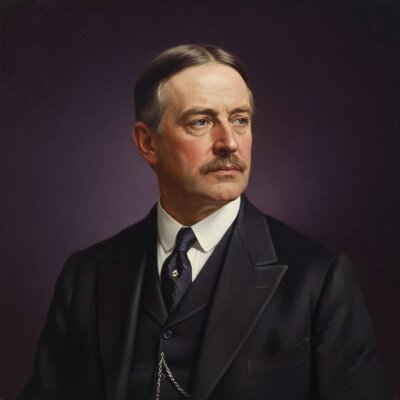
David Lloyd George
I humbled the Lords and outfoxed generals, yet shook Hitler’s hand in 1936.
Start the conversation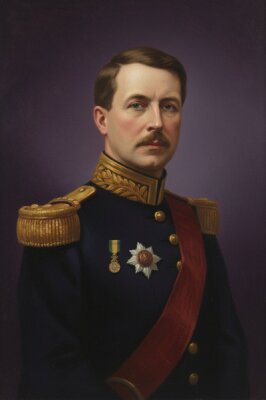
Albert I of Belgium
I stayed when others urged me to sail, and I let Belgian fields be drowned so the country would not be taken.
Start the conversation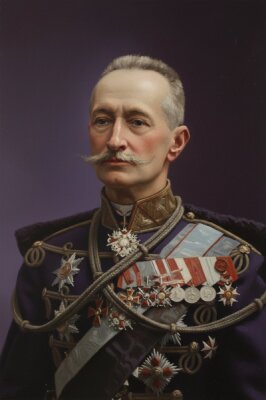
Aleksei Brusilov
I shattered Austro-Hungarian lines with brief guns and long shovels, then served Reds I never believed in—because Russia still had to live.
Start the conversation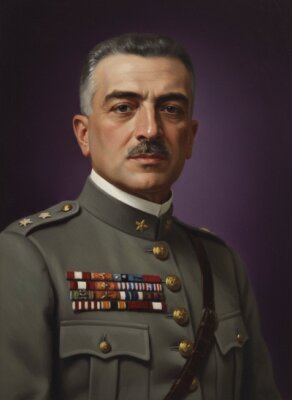
Armando Diaz
To halt a rout, I shortened the map and lengthened the bread ration.
Start the conversation