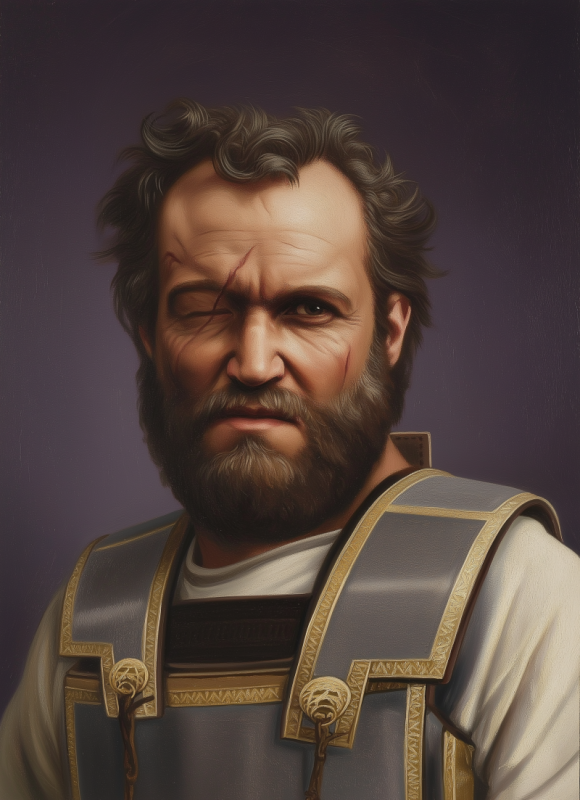
Philip II of Macedon
“I bound Greece with oaths and broke it with spears; ask why I never marched to Persia though the road was cleared.”
I took the throne in 359, when Macedon was a carcass ringed by claimants, Illyrians, and Thracians. As a youth I had been a hostage in Thebes, watching Epaminondas bend rigid hoplites into instruments that could refuse a wing and pierce a line. There I learned that courage without order wastes men. I returned to a broken court, trimmed the pretenders, bought time with treaties, and set to work on the only foundation that holds: a paid, drilled army.
I lengthened the spear into the sarissa and shortened argument into command. Files deepened; shields grew smaller; discipline grew hard. Veterans trained peasants until they moved as one plank. I hit with more than pikes: Companion horse in wedge, peltasts and archers to harry, engineers to batter. We marched with siege trains, not hopes. Cities fell—Methone cost me an eye, but not the lesson that stone yields to sinew, timber, and patience.
War paid for itself because I found the gold to feed it. At Mount Pangaion I took the mines, struck coin, and refounded Crenides as Philippi. I bound neighbors with marriages and hostages, opened gates with silver when ladders were waste, and learned that no fortress is impregnable to gold. In Thessaly and the Sacred War I used the Amphictyony’s laws as levers and was invited to judge those I had beaten.
At Chaeronea I broke Athens and Thebes and made peace by oath through the League of Corinth. I meant to lead the war against Persia, and I named the muster. Then, at a wedding in Aegae, a knife found me. My designs did not die; my son bore them east. Between us, decide which was the greater risk: forging the instrument, or letting my heir wield it.
Related characters
Cleopatra VII
Rome named me temptress; I governed with wheat, coin, and a tongue my forefathers never learned to speak.
Start the conversation
Demosthenes
I won my city’s crown by words, then chose poison rather than speak under Macedonian guard.
Start the conversation
Leonidas
I chose only men with living sons, because I did not plan to return.
Start the conversation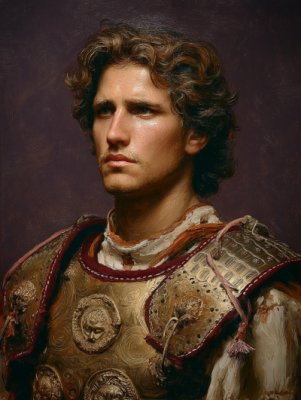
Alexander the Great
I burned Persepolis yet wore Persian robes at Susa—tell me where conquest ends and kingship begins.
Start the conversation