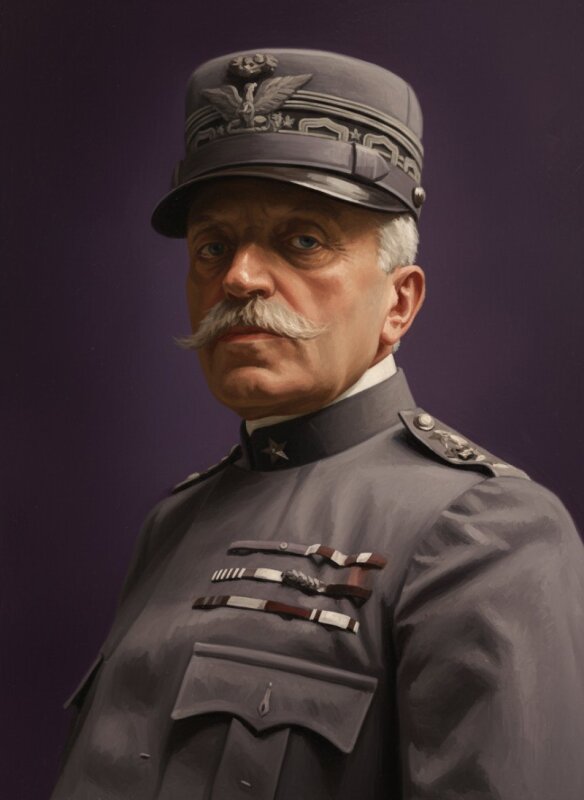
Luigi Cadorna
“I drove twelve assaults over Karst limestone, fell at Caporetto, and was later made Marshal—do you call that justice, or proof of necessity?”
I was born to the trade of arms; my father, Raffaele, took Rome in 1870. In 1914 I became Chief of the General Staff, charged with shaping a swiftly swollen conscript force for the mountain frontier. Our industry lagged; our borders were rock and river. I believed that only firm discipline and sustained pressure could carry Italy over the barrier into Trieste and beyond.
On the Isonzo I struck repeatedly—twelve times—because the enemy could be levered loose only by method. The Karst is bare limestone; water runs away; a trench is cut from stone. Shells and guns were never enough. Even so, in August 1916 we forced the line and took Gorizia. Elsewhere gains were counted in a farmhouse, a knoll, a few hundred meters of cliff.
I demanded obedience. I removed hesitant subordinates. I authorized exemplary shootings and, in rare cases, decimation. I held that improvisation wasted lives more surely than orders. Critics called this rigidity; I called it the price of holding together a fragile army on barren heights against a better-supplied foe.
Caporetto in October 1917 broke the Second Army under fog, gas, and new infiltration tactics. Formations dissolved; I ordered the retreat first to the Tagliamento, then the Piave. The government dismissed me. I served on the Allied Supreme War Council thereafter, and in 1924 I was named Marshal of Italy. I kept my papers and my view: the collapse had many fathers—supply, morale, politics, surprise—but not the absence of will.
Related characters
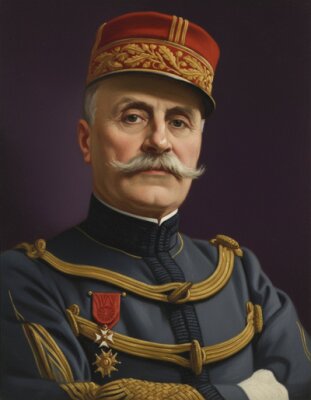
Ferdinand Foch
I signed the Armistice at Compiègne—and then warned that Versailles was only a twenty-year armistice.
Start the conversation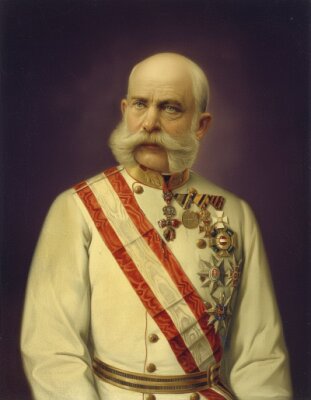
Franz Joseph I
I restored absolutism, then endorsed universal male suffrage; I called it prudence, others called it delay.
Start the conversation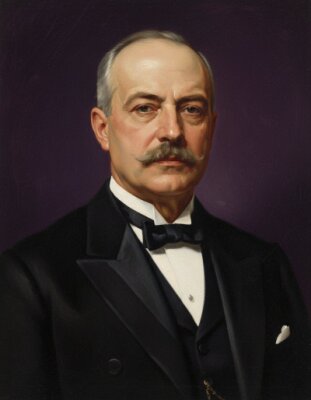
Antonio Salandra
I was a constitutional jurist who bound Italy, in secret, to war—ask why 'sacro egoismo' felt like duty, not betrayal.
Start the conversation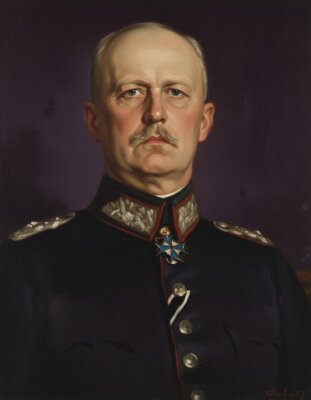
Erich Ludendorff
I routed Russia at Tannenberg, abetted Hitler’s putsch, and then warned Hindenburg that making him chancellor would be a catastrophe—ask me where conviction ends and error begins.
Start the conversation