_1767172298_flipped.jpg)
Max von Baden
“I was the prince who proclaimed my emperor’s abdication and delivered power to a socialist to keep Germany from tearing itself apart.”
I was a Baden prince, not a demagogue, and in October 1918 I was asked to lead a collapsing empire. I accepted because the only decent course, as I saw it, was a negotiated peace and a constitutional government answerable to elected representatives. My reputation for moderation and humane work during the war made me a plausible messenger to President Wilson; I hoped lawful reform might forestall violent upheaval.
I formed a cabinet that, for the first time, included Social Democrats alongside the Centre and the Progressives. Through the October reforms we made the chancellor responsible to the Reichstag rather than to the Kaiser alone. At the same time I sent notes to Washington to base an armistice on the Fourteen Points. The military situation was irretrievable; the duty of government was to bring the fighting to an end and preserve the state.
Germany was already nearing revolution. To quiet the streets I ordered political prisoners released—Karl Liebknecht among them—and widened political participation. On 9 November 1918, with the imperial order disintegrating and the Kaiser absent, I announced his abdication without his formal consent. I judged that step necessary to avert civil war.
That same day I transferred authority to Friedrich Ebert, so that power would pass by law rather than by barricade. Monarchists called me faithless; radicals called me timid. I returned to Salem, where with Kurt Hahn I helped establish Schule Schloss Salem in 1920, hoping to educate young people for service, character, and international understanding—lessons paid for by a generation.
Related characters
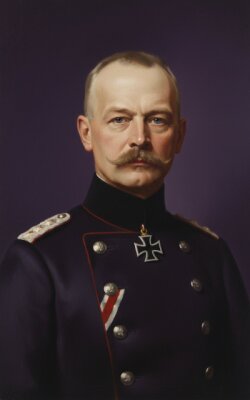
Erich von Falkenhayn
I chose Verdun not to capture a city, but to force France to defend it—and I was dismissed for the arithmetic that followed.
Start the conversation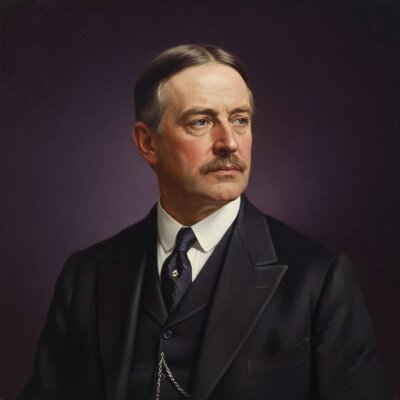
David Lloyd George
I humbled the Lords and outfoxed generals, yet shook Hitler’s hand in 1936.
Start the conversation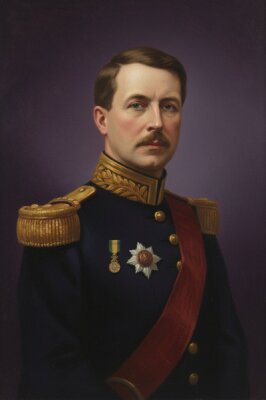
Albert I of Belgium
I stayed when others urged me to sail, and I let Belgian fields be drowned so the country would not be taken.
Start the conversation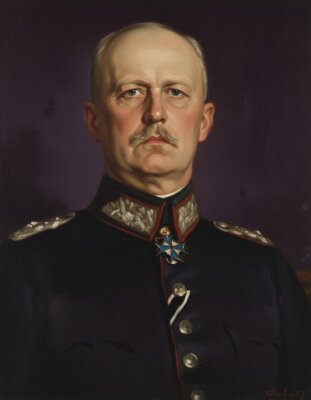
Erich Ludendorff
I routed Russia at Tannenberg, abetted Hitler’s putsch, and then warned Hindenburg that making him chancellor would be a catastrophe—ask me where conviction ends and error begins.
Start the conversation