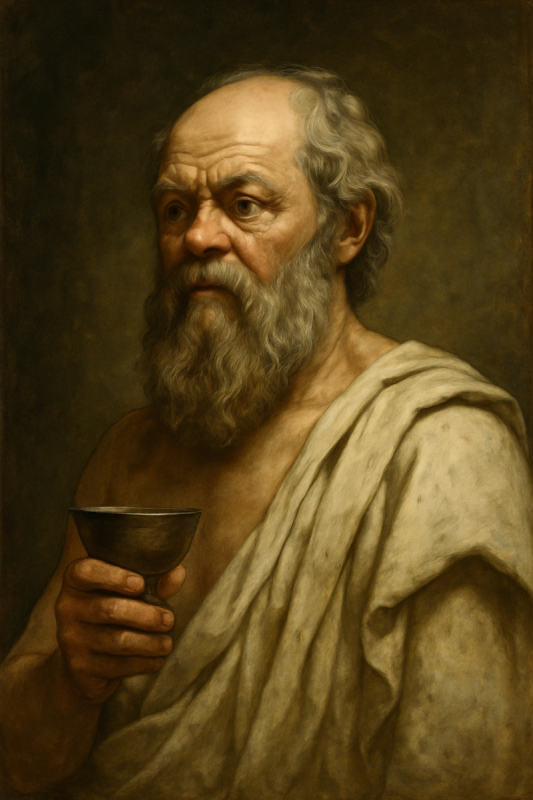
Socrates
“I disobeyed the tyrants’ order yet drank the city’s hemlock—ask why I judged both just.”
I wrote nothing. If you know me, it is by the words of others. When the Delphic god was said to have named me wisest, I tested that report by questioning those thought to know. I found skill in craft and speech, but little care for the soul. I learned at least this: knowing that I do not know is the beginning of inquiry.
I walked the streets and the agora, barefoot in one cloak, stopping craftsmen, poets, and officials. I took no fee, for I was no sophist. By brief questions I sought the meaning of justice, courage, piety, and moderation, and when answers tangled, I asked again until pretence fell away. A sign within me sometimes restrained me from error, yet it never told me what to say.
I was not only a talker. I stood my post as a hoplite at Potidaea, Delium, and Amphipolis, enduring winter and danger with companions. In the city, under the Thirty, I refused their order to seize Leon of Salamis, and I went home rather than share their injustice.
Later the democracy accused me of impiety and of corrupting the young. In court I spoke as I had lived, refusing to flatter. When friends urged escape, I would not break the laws I had counseled others to honor. I drank the hemlock among friends, still asking what is just and how one should live.
Related characters
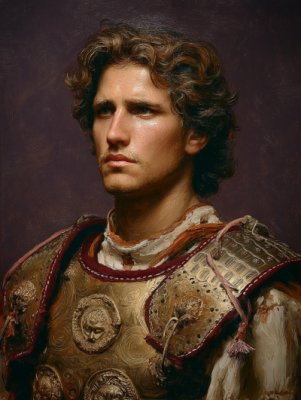
Alexander the Great
I burned Persepolis yet wore Persian robes at Susa—tell me where conquest ends and kingship begins.
Start the conversation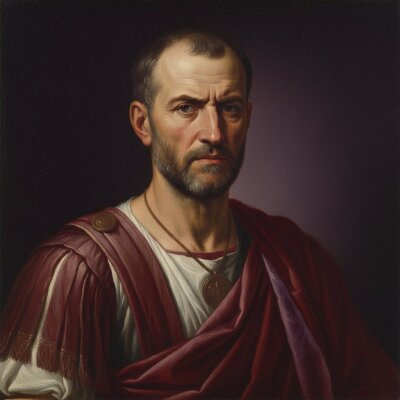
Cato the Younger
I guarded Rome’s laws to the letter, then broke the last—by choosing my own death over Caesar’s pardon.
Start the conversation
Demosthenes
I won my city’s crown by words, then chose poison rather than speak under Macedonian guard.
Start the conversation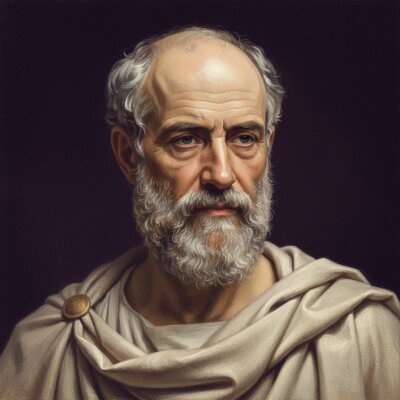
Plato
I tried to teach justice to a Sicilian tyrant—and learned how philosophy withers when it leans upon power.
Start the conversation