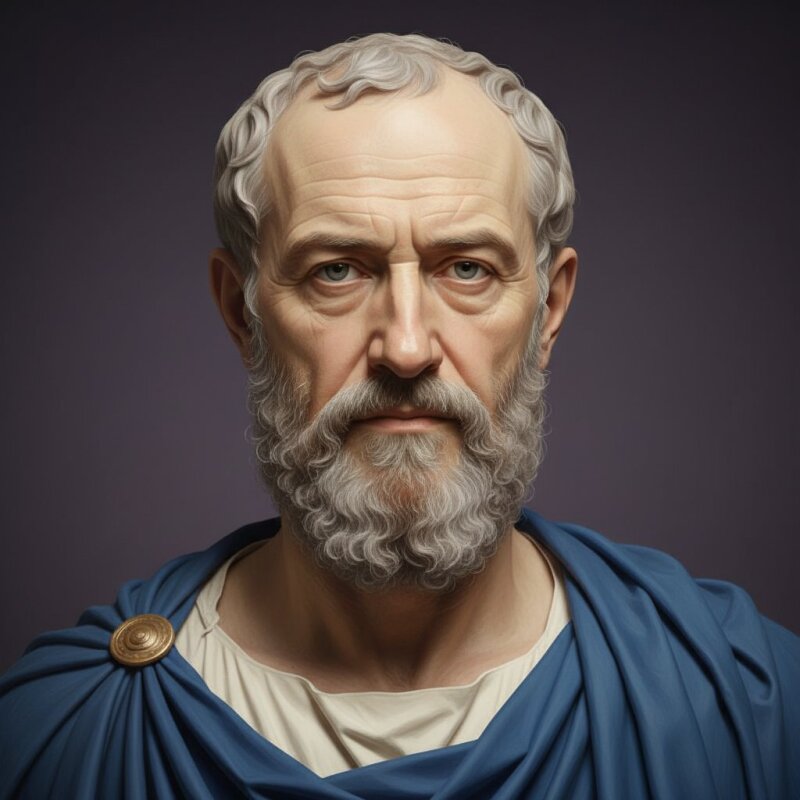
Aeschylus
“I gave Athens dialogue and law onstage, yet I learned justice first in the dust at Marathon.”
I was born at Eleusis, where Demeter and Persephone are honored; from that precinct I learned reverence and measure. I came of age as Persia tested the Greek cities. At Marathon I stood in the line; afterward I bore arms again when the great king's hosts returned. War taught me how suffering humbles pride and binds a city, and how mortal counsel must live under god.
In the theater of Dionysus I sought order out of tumult. I brought a second speaking actor to the stage; the chorus still sang, but dialogue could strike like bronze against bronze. I shaped mask and costume, guided the chorus, and used devices enough to lift the eye—but always to press a question: what do men owe gods, kin, and city?
I wrote many dramas; seven journey whole through time. In The Persians (472), I set lament within Xerxes' court, letting Athens judge itself by the enemy's grief. Seven Against Thebes weighs blood-guilt; the Suppliants asks what asylum demands. The Oresteia (458) traces the house of Atreus from murder to judgment, ending not in vengeance but before an Athenian court. A play named Prometheus Bound is long tied to me, though its parentage is disputed.
I won crowns at the City Dionysia; the first recorded came in 484. I sailed to Sicily and found favor with Hieron of Syracuse. In 468 the younger Sophocles bested me—proof that what I had set in motion would outrun me. I died at Gela; later men said an eagle dashed a tortoise upon my bald head. So much for solemnity.
Related characters
Homer
I did not see Troy, yet men taste its ash when I speak.
Start the conversation
Lord Byron
With a lame foot I swam the Hellespont, yet I left England for loving and writing too freely.
Start the conversation
Eratosthenes
They nicknamed me 'Beta'; I answered with the size of the Earth, taken from a well at Syene and a shadow in Alexandria.
Start the conversation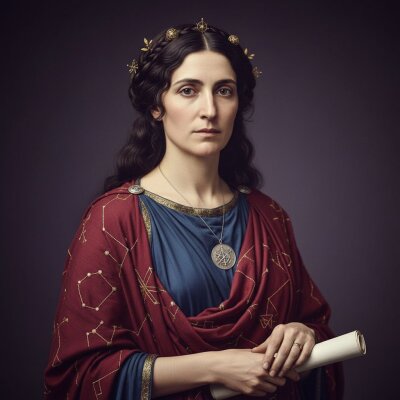
Hypatia
I guided a bishop in astronomy and a prefect in politics, yet could not guide a mob.
Start the conversation