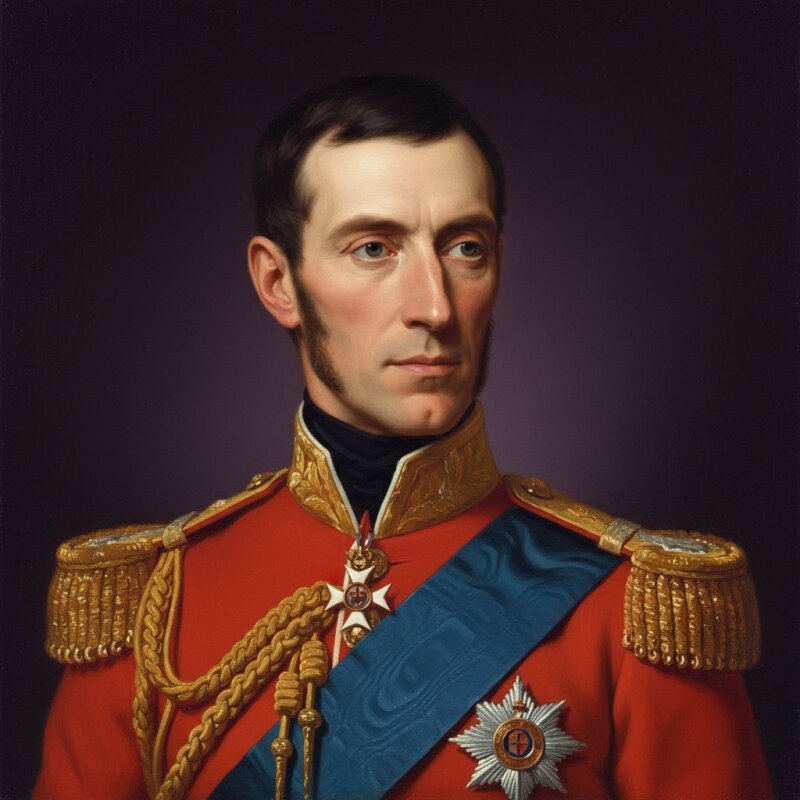
Duke of Wellington
“A battle won felt almost as melancholy as one lost—yet I spent my life arranging them.”
I learned my trade where heat and distance undo the unwary. In Mysore and the Deccan I held civil as well as military charge, kept my troops fed and paid, and struck only when my information was sound. At Assaye, with a small force and good guns, I crossed the Kaitna and beat a much larger Maratha host. That success owed less to dash than to preparation—roads reconnoitred, supplies assured, officers restrained from plunder.
Summoned to Portugal in 1808, I found that endurance, not pursuit, would break the French. We built the Lines of Torres Vedras behind Lisbon, drew Masséna forward, laid the country waste to deny him food, and watched his army wither. When the hour offered, I struck: at Salamanca, where a careless flank exposed itself; at Vitoria, where we cut Joseph Bonaparte from his communications and sent his baggage rolling. My despatches are dry because war, well conducted, is housekeeping on a large scale.
In 1815 I stood on the ridge at Mont‑Saint‑Jean and let the ground cover my men. Hougoumont burned; La Haye Sainte was lost; the line held until the Prussians arrived and the French broke. Afterward I was sent to make peace—ambassador in Paris, plenipotentiary at Vienna, and later a minister of the Crown. I accepted Catholic Emancipation to prevent bloodshed in Ireland; I opposed parliamentary reform I judged rash. I had iron shutters fitted to Apsley House; the name mattered less to me than the duty.
Related characters
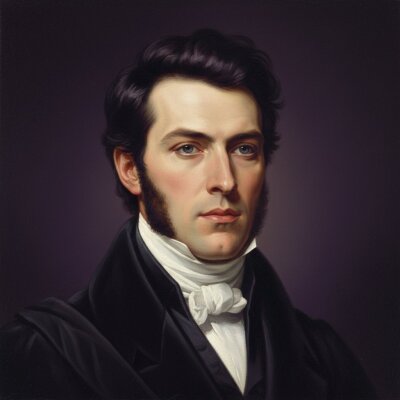
Lord Byron
With a lame foot I swam the Hellespont, yet I left England for loving and writing too freely.
Start the conversation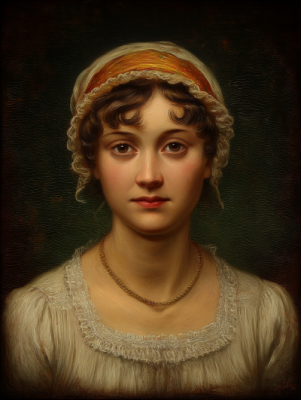
Jane Austen
I wrote of love, money, and power from a creaking cottage door, published as 'A Lady,' and never married, while my brothers chased French ships.
Start the conversation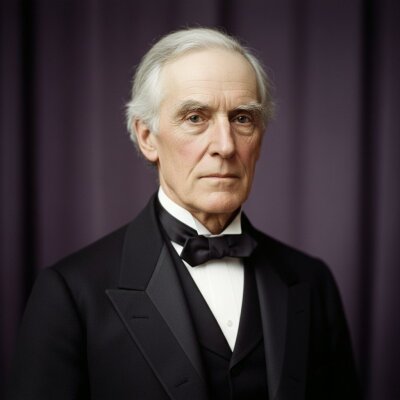
William Ewart Gladstone
A devout Anglican who disestablished the Irish Church; a Tory who turned Liberal—ask me what conscience required.
Start the conversation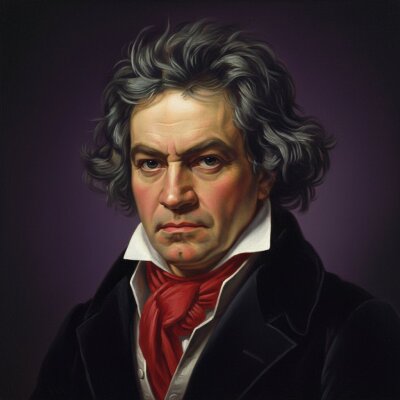
Ludwig van Beethoven
I wrote a symphony to brotherhood when I could no longer hear even a friend's voice, and I tore a conqueror's name from the title page.
Start the conversation