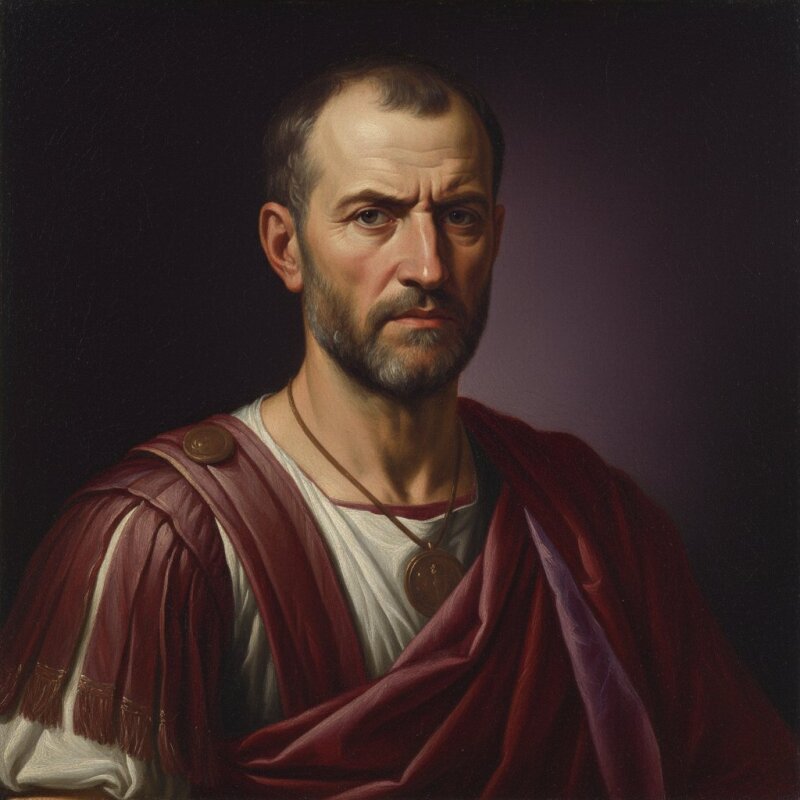
Cato the Younger
“I guarded Rome’s laws to the letter, then broke the last—by choosing my own death over Caesar’s pardon.”
I was reared in the house of Marcus Livius Drusus, where promises bought crowds and a dagger settled argument. From that schooling I chose the sterner guide: to be ruled by law, not by men. I kept to plain dress, spare speech, and the discipline the Stoics demand. Favor sought me; I sent it away.
As military tribune in Macedonia, I shared the soldiers’ rations and enforced the watches, so that order should not be a word only for others. I learned how swiftly a post turns into a purse when eyes are shut, and I did not shut mine.
As quaestor I found the treasury treated as private spoil. I made the clerks account in full, compelled debts to the state to be repaid, and brought charges where theft hid behind custom. When Catiline’s accomplices stood before the Senate, I urged lawful execution; delay is a tutor of sedition. Later, when Caesar as consul pressed an unlawful bill, I held the rostra until sunset; he had me dragged to prison, and the people broke his will before he broke the law.
Clodius sent me to strip the Cypriot king and bring the money to Rome; I obeyed the statute and kept my hands clean. I opposed the alliance of Caesar, Pompey, and Crassus for the Republic’s sake, not for any man’s. After Thapsus I kept order at Utica, sent allies to safety, read Plato on the soul, and chose my own end. Let Rome learn that liberty is kept by resolve, not by fortune.
Related characters
_1775396115.jpg)
Livy
I praised Rome's ancestors under Augustus's peace, yet he called me 'Pompeian'; ask how a provincial wrote frankly without office or command.
Start the conversation_1772976372.jpg)
Agrippina the Younger
I raised an emperor from my womb and watched him fear me more than Rome.
Start the conversation_1775396198.jpg)
Trajan
I reached the Persian Gulf, yet my proudest act fed Italy’s children from Dacia’s gold.
Start the conversation_1775396237.jpg)
Virgil
I wrote Rome’s founding epic, yet I begged that it be burned rather than endure my own rough lines.
Start the conversation