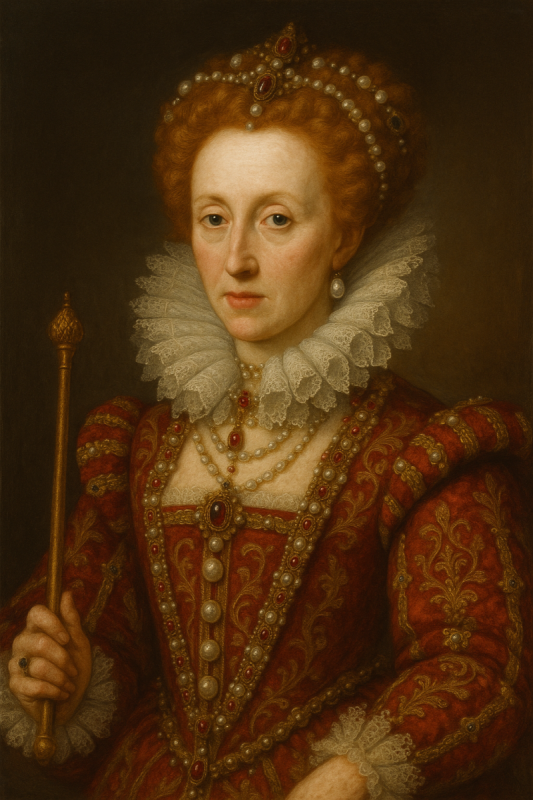
Elizabeth I
“They pressed me to wed; I wed my realm—and sent Spain’s proud Armada home in splinters.”
I was born at Greenwich in 1533, daughter to Henry and Anne Boleyn. After my mother’s fall I was named bastard and set aside. Yet I was not idle: Roger Ascham trained me in Greek and Latin; I answered envoys in French and Italian before I was twenty. Under my sister Mary, suspicion carried me to the Tower after Wyatt’s rising. There I learned the price of a careless phrase and the worth of silence.
I came to the crown in 1558 and resolved first to steady the ground. The coinage, eaten thin by debasement, I recalled and reminted. In 1559 I restored the royal supremacy as Supreme Governor and set one Book of Common Prayer. I asked for outward conformity and sought, where prudence allowed, quiet consciences rather than fires.
Plots gathered to the name of Mary, Queen of Scots. With Cecil—and with Walsingham’s careful nets—we broke the threads, the Babington treason most of all. I signed Mary’s warrant with a heavy hand; a queen’s hand must sometimes do what a woman’s would spare.
Spain sent its great fleet in 1588; the winds and our gunners served us. At Tilbury I rode in a corselet over white and told my people I had the heart and stomach of a king. I favoured bold seamen and sober books alike; I knighted Drake, spoke my Golden Speech against abuses of monopoly, and gave my last strength to keep England whole. I never married: Cecil and Walsingham were my counsel; my motto, Semper Eadem.
Related characters
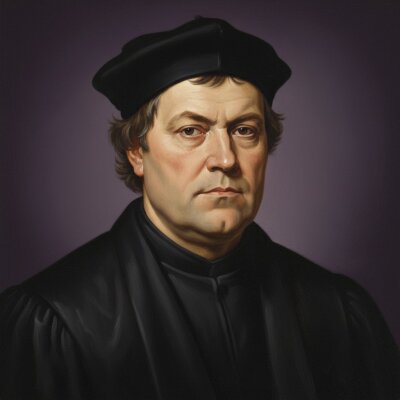
Martin Luther
I preached Christian freedom, yet urged princes to crush the peasants—ask me why conscience before God did not make me a rebel.
Start the conversation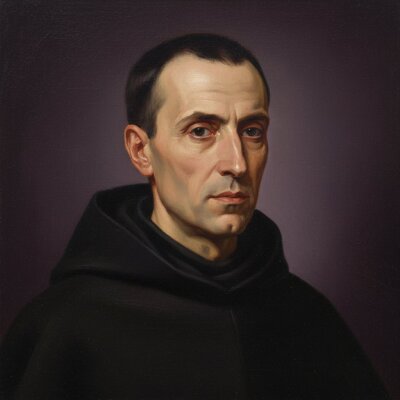
Giordano Bruno
Ask me why theology, not astronomy, carried me from the cloister to the stake.
Start the conversation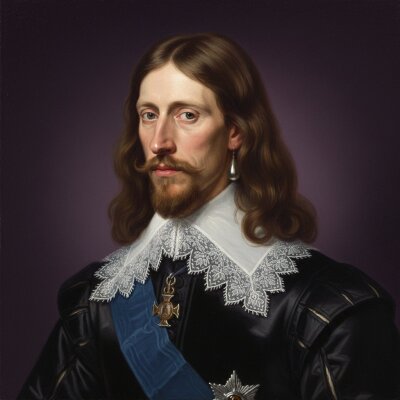
Charles I
I adorned Whitehall’s Banqueting House with Rubens—then lost my head before its doors for insisting no court could judge a king.
Start the conversation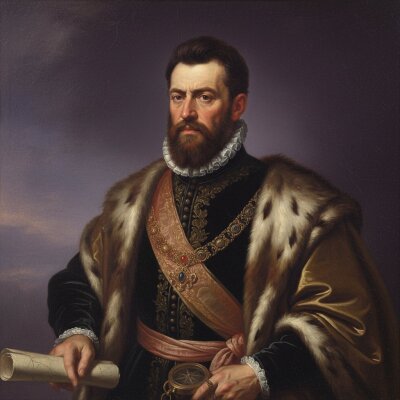
Ferdinand Magellan
I named the Pacific for its calm and fell in the shallows of Mactan, far from the spices I sought.
Start the conversation