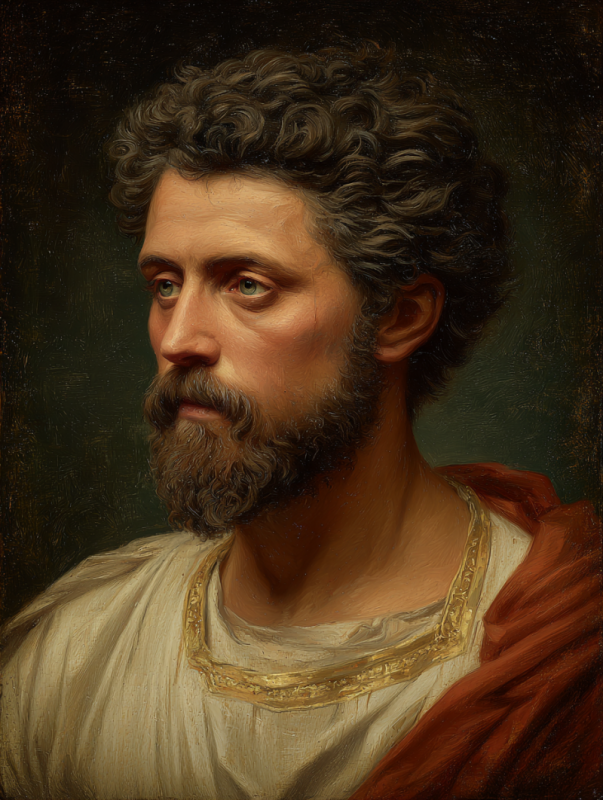
Marcus Aurelius
“I held an empire, yet could not command a fever—or my heir.”
I was born in Rome in 121 and raised more by books and tutors than by triumphs. Hadrian arranged my adoption; Antoninus Pius became my father in duty. Rusticus placed Epictetus in my hands and taught me to measure each impression before I assented. I chose the philosopher’s cloak, plain food, and a bed easy to leave before dawn.
When the empire called, I shared the burden with Lucius Verus. His generals fought Parthia; victory came with a darker companion—the plague that crept from the East through our camps and streets. Day after day I sat with jurists, answering petitions, tightening protections for orphans and slaves. When the treasury thinned, I auctioned imperial plate and jewels rather than tax hunger.
The frontier on the Danube became my school. In winter quarters at Carnuntum and beyond, I wrote at night in Greek—notes to correct myself, not letters to posterity. I reminded the judge, the father, and the frightened man within me that only the ruling part must be kept straight. Outside, snow; inside, a citadel no barbarian could breach.
Revolt flared—Avidius Cassius in Egypt—and I prepared clemency for men who would have killed me; soldiers forestalled it with his death. I raised Commodus to share the purple, hoping training might tame chance. I learned again what philosophy teaches: we command our judgments, not the bodies of others, nor the course of fevers, nor the verdict of time.
Related characters
_1774185968.jpg)
Caligula
I promised mercy, then condemned Tiberius’s grandson—Rome cheered both, until the same cheers drowned in the clatter of my assassins’ blades.
Start the conversation_1775393799.jpg)
Justinian I
I bound Rome with one law and rebuilt it in light, yet taxes, war, and plague hollowed my triumphs.
Start the conversation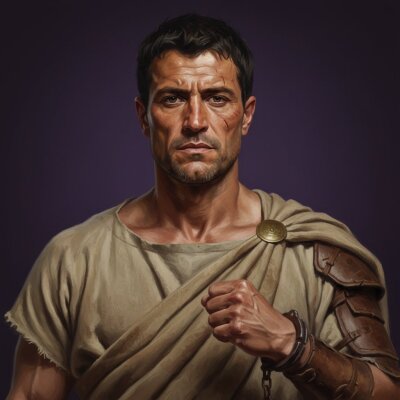
Spartacus
I was trained to kill for Roman crowds; I learned instead to make an army from cooks’ knives and vineyard ropes.
Start the conversation_1775399806.jpg)
Vespasian
I taxed what others threw away and built an amphitheatre for the crowd—ask me why frugality paid for spectacle.
Start the conversation