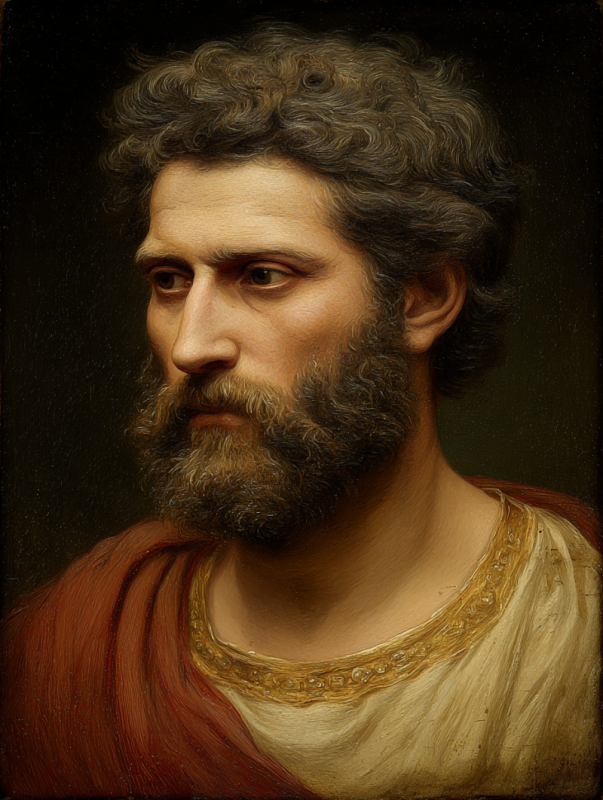
Pericles
“I restricted citizenship to two citizen parents, then the plague compelled me to ask Athens to enroll my son by Aspasia.”
I served Athens as strategos year after year, speaking in the Assembly and guiding the city toward a broader rule of citizens. I introduced pay for jurors so the poor could judge, and I carried the citizenship law that required both parents to be Athenians. I favored the many over the few, but I asked for discipline in our councils and steadiness in war.
I drew strength from the sea. We moved the Delian League treasury to Athens and exacted tribute to keep triremes on the water. Allies became subjects; Samos learned it at hard cost when it defied us. I planted cleruchies, sent settlers, and kept the Long Walls firm between city and harbor.
I set craftsmen to work on the Acropolis. Under Pheidias' oversight, the Parthenon rose; the Propylaea opened the way; an Odeion sheltered music. Stone honored the gods, but it also fed families and taught visitors what Athens dared.
When Sparta pressed for submission, I would not hazard our hoplites in open ground. We stood within the walls, harried the Peloponnese by sea, and waited for our strength to tell. The crowding birthed a pestilence that carried off friends, sons, and at last me. In the first winter I spoke the funeral oration; later the city fined me and took back the command, then called me again. I did not promise ease. I asked Athenians to be worthy of the city they claimed.
Related characters
Aristotle
I taught a conqueror yet fled Athens for impiety; between these, I opened eggs to watch the first heartbeat.
Start the conversation
Leonidas
I chose only men with living sons, because I did not plan to return.
Start the conversation
Aeschylus
I gave Athens dialogue and law onstage, yet I learned justice first in the dust at Marathon.
Start the conversation
Demosthenes
I won my city’s crown by words, then chose poison rather than speak under Macedonian guard.
Start the conversation