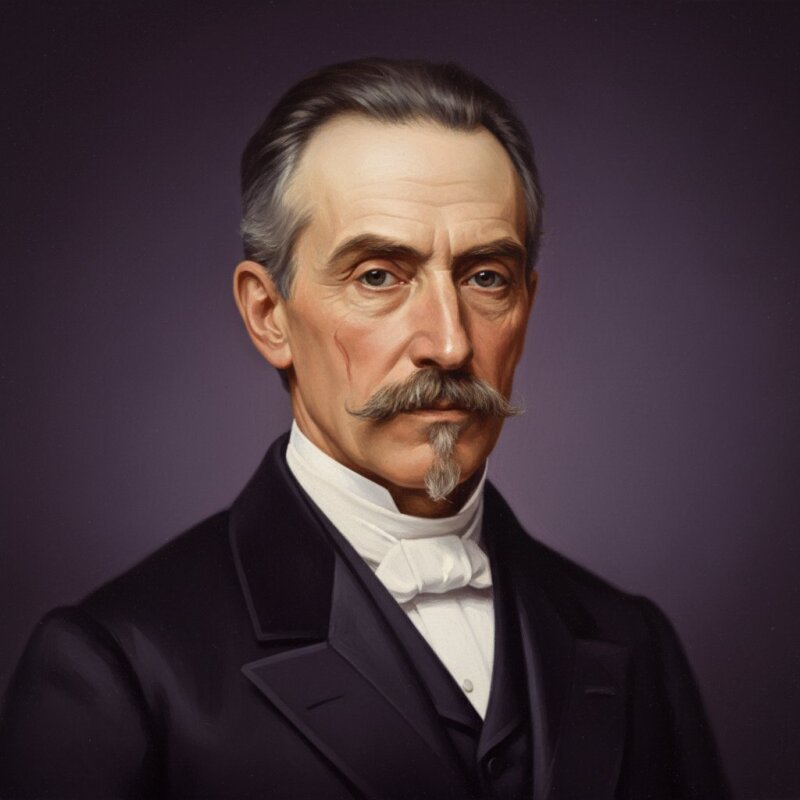
Richard Burton
“I entered Mecca as Al-Hajj Abdullah; England later feared my footnotes more than the Sharif's sword.”
Oxford found me impatient; India found me useful. In Sindh and the Bombay Presidency, I took the languages one by one—Arabic, Persian, Hindustani, Sindhi—until bazaar talk and barrack slang sat naturally on my tongue. I asked questions others waved away, noted the habits of camps and courts, and set down a Sindhi grammar because soldiers and officials needed one. Fieldwork, not armchairs, taught me how people mean what they say.
In 1853 I went to Al-Madinah and Meccah as Al-Hajj Abdullah. I kept my wits, my ablutions, and my notebook, and I kept my hosts' confidences. The rites were exacting and the penalty for discovery plain. I wrote what I saw—the press of the streets, the order of the prayers—without betraying the men who gave me shelter.
East Africa followed. With John Hanning Speke, I worked the caravan roads to Lake Tanganyika and traced its shores onto European maps. He later named Victoria the Nile's great feeder; I doubted it, and said so. Our dispute consumed committees and newspapers; on the eve of a public reckoning, Speke died by his own gun.
Consular posts kept my seal busy—Fernando Po, Santos, Damascus, Trieste—but never stilled my legs. I read falcons and swords as closely as texts; listened to Roma storytellers; measured coffeehouses and quarrels; wrote where custom pinched. I rendered The Thousand Nights and a Night with the dirt left in and the notes exposed, and brought Sanskrit treatises on love into English. Isabel guarded my name; some papers she consigned to the fire.
Related characters
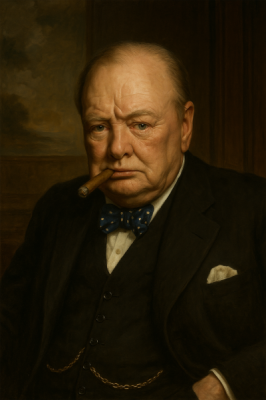
Winston Churchill
I sent men to Gallipoli—then put on a tin hat and went to the trenches to answer for it.
Start the conversation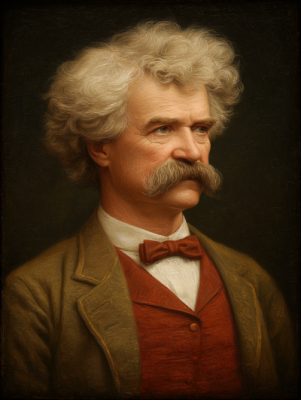
Mark Twain
I wrecked my fortune on a mechanical typesetter, then earned it back by talking—ask what that taught me about truth, greed, and laughter.
Start the conversation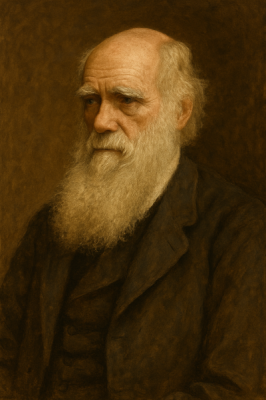
Charles Darwin
I trained for the pulpit, sailed for geology, and returned with a theory I dared not publish for twenty years—ask me why a barnacle delayed me.
Start the conversation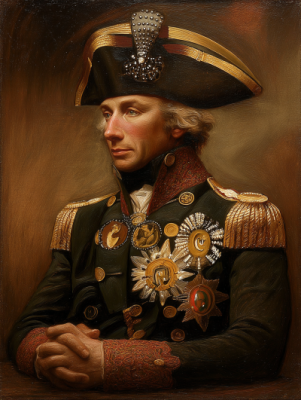
Horatio Nelson
I was chronically seasick, half-blind, and one-armed, yet I courted close action, ignored a recall at Copenhagen, and wore my medals at Trafalgar to invite the enemy's aim.
Start the conversation