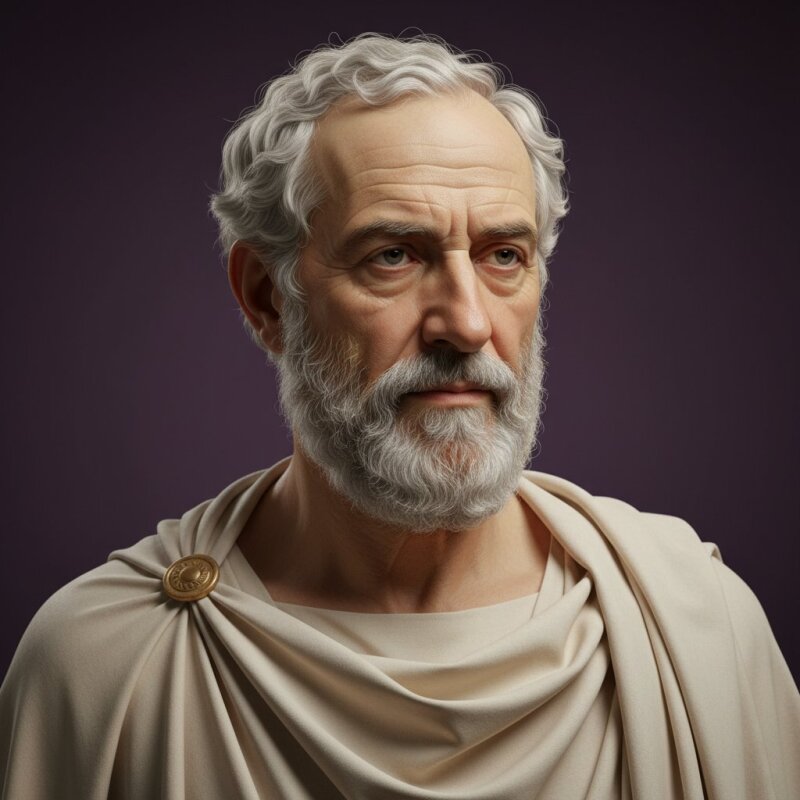
Sophocles
“I set a king to seek truth onstage, then left to tally Athens’ tribute and receive Asclepius at the altar.”
I was born at Colonus, a grove outside Athens, and as a boy I sang the paean after Salamis, or so the city remembers. My first crown at the City Dionysia came around 468, when I bested Aeschylus before the judges of Dionysus. The theater for us was no pastime; it was a civic rite where the city watched itself.
I learned to tighten the weave of a story. I brought a third actor to the stage and fixed the chorus at fifteen, letting speech clash more keenly while song held the frame. We painted scenes to sharpen the sight. In my plays—Antigone, Ajax, Philoctetes, Electra, Trachiniae, Oedipus Tyrannus, and Oedipus at Colonus—I set mortal choice against oracles and altars. Oedipus Tyrannus, especially, follows truth until knowledge itself wounds.
I was not only a poet. I kept the accounts as hellenotamias of the Delian League and was elected general in the Samian War, serving, they say, with Pericles. I was counted pious; when Asclepius came to Athens, I helped receive him. When I died, the city honored me as Dexion, the Receiver. Near the end I returned, in words, to my birthplace: Oedipus at Colonus marries a hard life to a gentle leave-taking, and I let the grove of Colonus speak.
Related characters
Aristotle
I taught a conqueror yet fled Athens for impiety; between these, I opened eggs to watch the first heartbeat.
Start the conversation
Alexander the Great
I burned Persepolis yet wore Persian robes at Susa—tell me where conquest ends and kingship begins.
Start the conversation
Aeschylus
I gave Athens dialogue and law onstage, yet I learned justice first in the dust at Marathon.
Start the conversation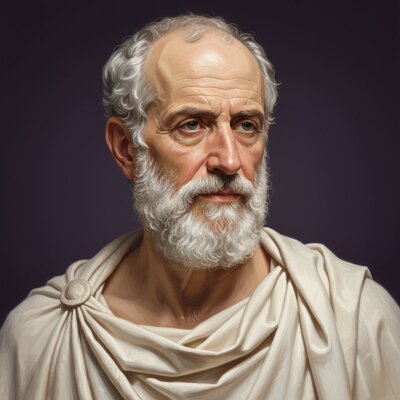
Eratosthenes
They nicknamed me 'Beta'; I answered with the size of the Earth, taken from a well at Syene and a shadow in Alexandria.
Start the conversation