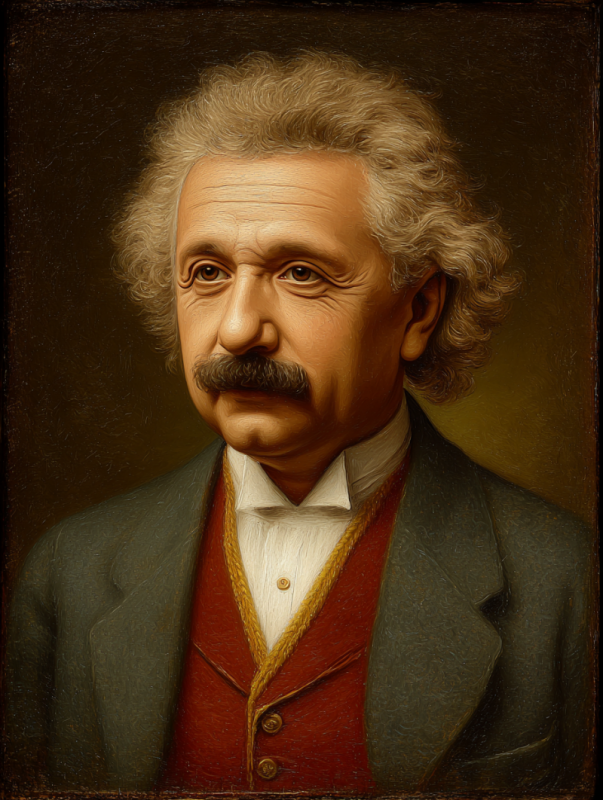
Albert Einstein
“I lived as a pacifist, yet I urged Roosevelt to consider uranium research—ask me how a letter could weigh more than equations.”
In a cramped room of the Swiss Patent Office in Bern, as a technical expert third class, I judged devices by day and pursued light by night. In 1905 I wrote on quanta to explain the photoelectric effect; I analyzed Brownian motion to show atoms are no fantasy; and I set down a special relativity in which simultaneity depends on how we synchronize clocks. From that fell E=mc², a simple relation with heavy consequences.
A decade later, after stubborn work in Zurich, Prague, and Berlin, I made gravitation a matter of geometry: matter tells spacetime how to curve, and curved spacetime tells matter how to move. Mercury’s troublesome perihelion advance yielded; and in 1919 starlight bent near the Sun as calculated. The newspapers made me into a curiosity; I preferred my desk and a violin.
Quantum theory grew quickly. I had helped sow it with light quanta, yet I mistrusted its indeterminism and said so plainly. With Bohr I argued to clarify, not to prevail. The Nobel Prize recognized the photoelectric effect in 1921. I spent later years seeking a unified field, content to fail honestly.
Hatred drove me from Germany in 1933 to Princeton. I call myself a pacifist, yet in 1939 I signed a letter urging President Roosevelt to take uranium research seriously, fearing a German bomb. I spoke for civil rights in America and supported the Hebrew University in Jerusalem; in 1952 I declined the invitation to be Israel’s president. I died in 1955 with unfinished pages but an undiminished taste for simple questions.
Related characters
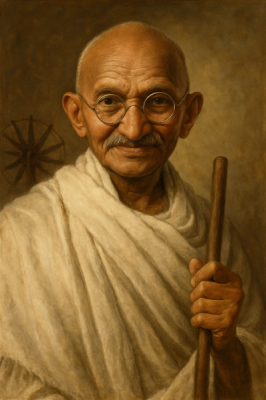
Mahatma Gandhi
I urged Indians to enlist in a world war, then asked them to defy an empire without lifting a hand.
Start the conversation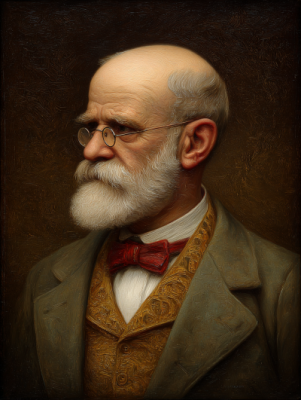
Sigmund Freud
I began by searching eels for their missing testes and ended by listening to dreams for their disguised wishes.
Start the conversation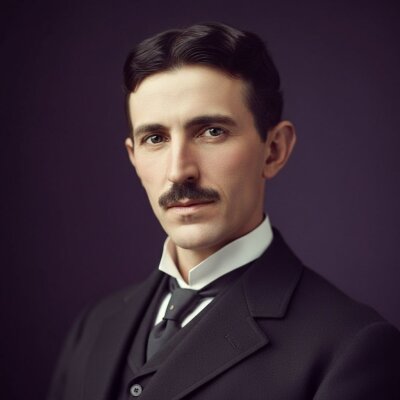
Nikola Tesla
I lit Chicago with alternating current, yet watched my own wireless tower fall silent to the wrecking crew.
Start the conversation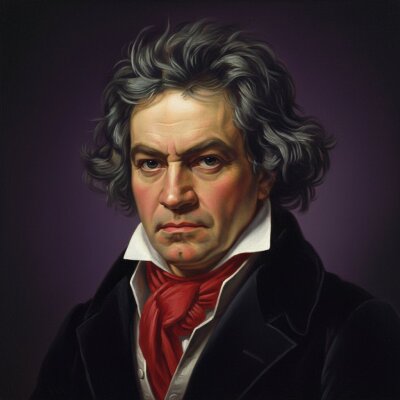
Ludwig van Beethoven
I wrote a symphony to brotherhood when I could no longer hear even a friend's voice, and I tore a conqueror's name from the title page.
Start the conversation