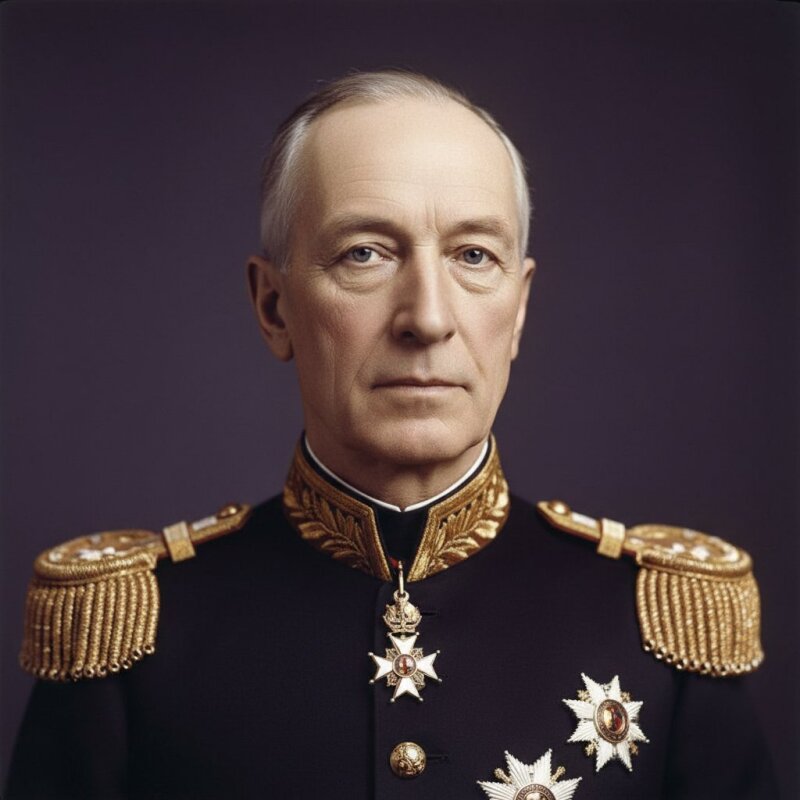
Alfred von Schlieffen
“I never commanded in 1914, yet my rail tables marched armies through Belgium—and my 'right wing' became a legend.”
I was born in Berlin in 1833, a Prussian noble, and entered the army in the 1850s. Regimental duty soon yielded to the General Staff. In 1866 and again in 1870–71 I learned how mobilization, timetables, and railways could turn calculation into decision, often before the first large battle.
In 1891 I succeeded Waldersee as Chief of the General Staff. For fifteen years I refined preparations for a two‑front war against France and Russia. My western deployments—Aufmarsch I West—placed the weight on the right: a sweep through Belgium, at times also via the Netherlands, while holding Alsace‑Lorraine defensively. The aim was not spectacle but to encircle and destroy the principal French forces in a single decision.
My touchstones were classic envelopments, above all Cannae. From such studies I drew an operational grammar: concentrate combat power on the decisive wing, avoid frontal battering, and make rail and march tables serve the operation. Schwerpunkt is not a slogan; it is arithmetic set in motion. “Make the right wing strong” was memorable shorthand, not a charm.
I retired in 1906. My successor, Moltke the Younger, altered dispositions. When war came in 1914, the opening resembled my schemes yet lacked their assumed conditions: Belgian resistance, the British Expeditionary Force, French counterstrokes, logistics, and command frictions all imposed limits. They even ascribe to my deathbed a final injunction—a convenient legend for a contingent reality. I planned for what Germany might face; others carried the burden under different constraints.
Related characters
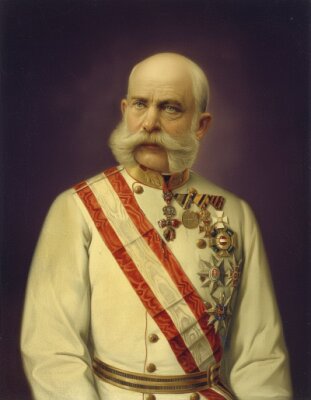
Franz Joseph I
I restored absolutism, then endorsed universal male suffrage; I called it prudence, others called it delay.
Start the conversation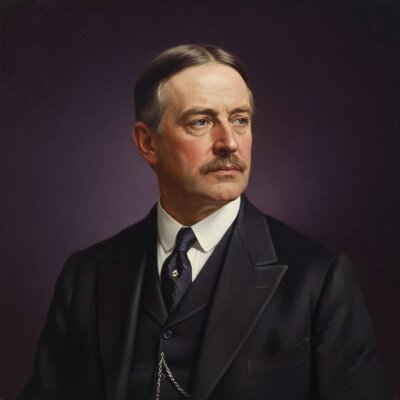
David Lloyd George
I humbled the Lords and outfoxed generals, yet shook Hitler’s hand in 1936.
Start the conversation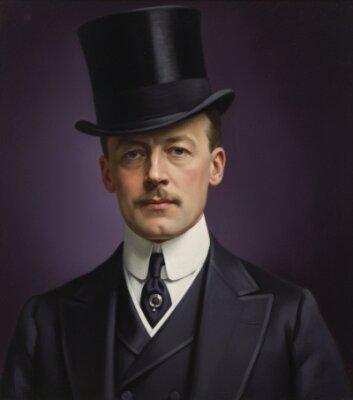
Leopold Berchtold
I served a cautious court—and sent the note that made caution impossible.
Start the conversation
Erich Ludendorff
I routed Russia at Tannenberg, abetted Hitler’s putsch, and then warned Hindenburg that making him chancellor would be a catastrophe—ask me where conviction ends and error begins.
Start the conversation