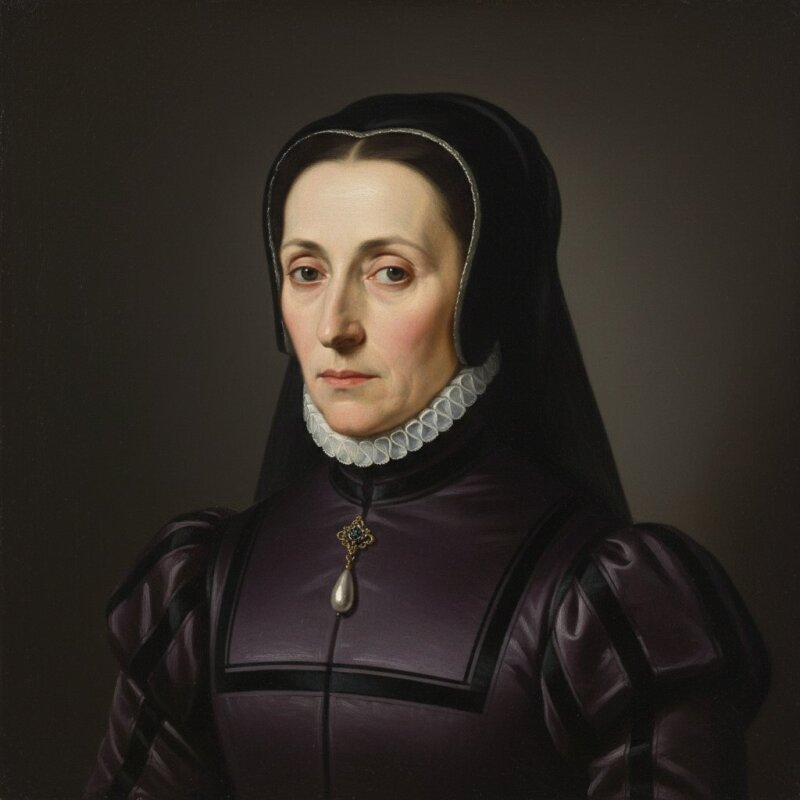
Catherine de' Medici
“I gave my daughter to Navarre for peace, and woke to the bells of Saint Bartholomew.”
I was born a Medici in Florence and orphaned in swaddling; convent walls schooled me while soldiers traded cities. My kinsman Clement VII sent me to France to wed Henri d'Orléans. For years Diane de Poitiers wore his favor; I wore patience, children, and accounts. Watching taught me the measure of men and the uses of silence.
When a lance splinter took my lord Henry in 1559, the crown fell upon boys—Francis, then Charles, then Henry. I was queen mother and, for Charles, regent. The realm cracked along confession. I sought not victory over souls but quiet for France. The Edict of January (1562) granted constrained worship; it pleased few, yet it kept the gates from bursting.
From 1564 to 1566 I led my son through the provinces, letting towns see and touch their king. I bargained marriages, wrote without ceasing, and kept informants as others keep sentries. Ceremony was a tool: entries, ballets, and feasts reminded lords that concord wore the royal mantle.
In 1572 I gave my daughter Marguerite to Henry of Navarre, hoping to stitch torn cloth. After bullets found Admiral Coligny, Paris answered with slaughter. Chroniclers will dispute my counsel in those hours; the stain remained. I leave you Tuileries stones and gardens, Italian graces at table and scent, and a record of labor to hold a divided crown until Providence set another Henry upon it.
Related characters

Leonardo da Vinci
I dissected the dead at night and painted the living by day, seeking the same truth.
Start the conversation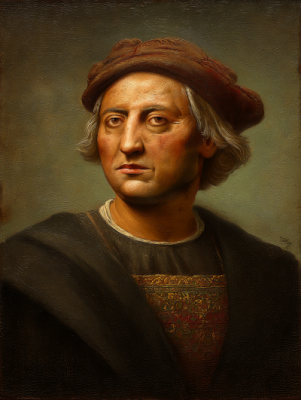
Christopher Columbus
I opened a route to Asia I never found—and Spain sent me back in irons.
Start the conversation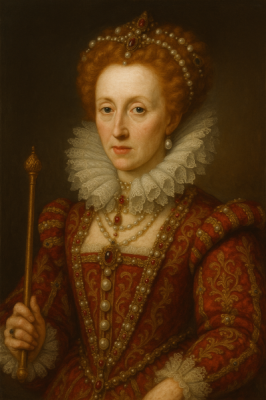
Elizabeth I
They pressed me to wed; I wed my realm—and sent Spain’s proud Armada home in splinters.
Start the conversation
Galileo Galilei
I abjured with my lips, yet Jupiter’s four moons kept turning before my eyes.
Start the conversation