_1780735301.jpg)
Emma Hamilton
“I sped a queen through winter seas and bore Nelson a daughter—so how did I end counting debts behind a Calais window?”
I was born Emy Lyon in 1765, in Cheshire, and learned early the worth of a steady hand. In London I served where I could—carrying trays, keeping small accounts, and holding my tongue when prudence asked it. Mr. Romney found in my face a hundred uses; I sat till my limbs ached and learned how a breath, a turn of the neck, could set a tale in motion. With a lamp and a few shawls I shaped the Attitudes—silent figures from the antique, made quick by gesture.
Mr. Greville named me Emma Hart and saw that my letters should pass anywhere. He set me to languages and song, and to the order of a room. In 1786 I went to Naples to Sir William Hamilton’s care; he married me in 1791. I was hostess and interpreter by day, and in confidence with Queen Maria Carolina by night. I could step from a charade to a dispatch without changing my dress.
After the Nile in 1798, Admiral Nelson came ashore with torn sails and high purpose. I wrote and carried messages, urged victuals forward, and coaxed tempers down from triumph. When the French pressed close, I helped hasten the royal family aboard Vanguard for Palermo—a winter passage of cramped cabins, sick children, and prayer.
In 1801 I bore Horatia, quietly. Sir William died in 1803; for a while thereafter we kept house with Nelson and were happy in our small fashion at Merton. Trafalgar ended that. Though he wished the nation to provide for me, none did. Debts crept, then ran; I knew the debtors’ prison; at last I crossed to Calais and died there in 1815. Judge me as you will: I used the tools I had—gesture, language, and affection—to keep doors open and ships supplied.
Related characters
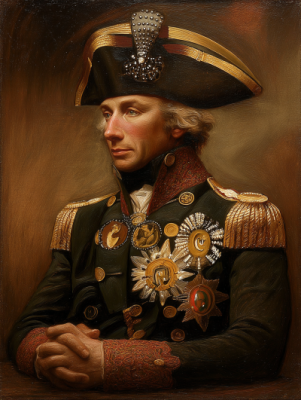
Horatio Nelson
I was chronically seasick, half-blind, and one-armed, yet I courted close action, ignored a recall at Copenhagen, and wore my medals at Trafalgar to invite the enemy's aim.
Start the conversation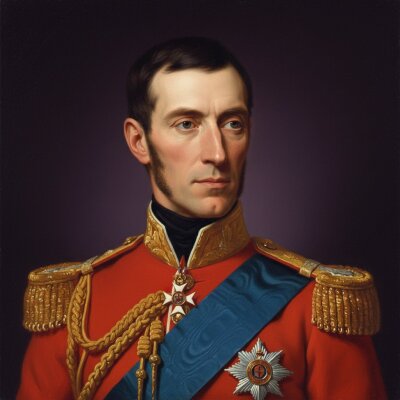
Duke of Wellington
A battle won felt almost as melancholy as one lost—yet I spent my life arranging them.
Start the conversation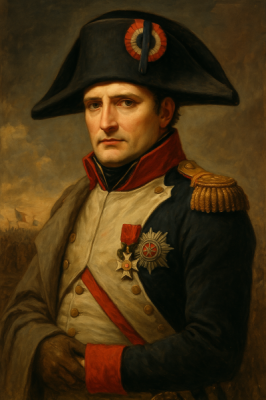
Napoleon
I wrote equality into law, and in 1802 I restored slavery.
Start the conversation