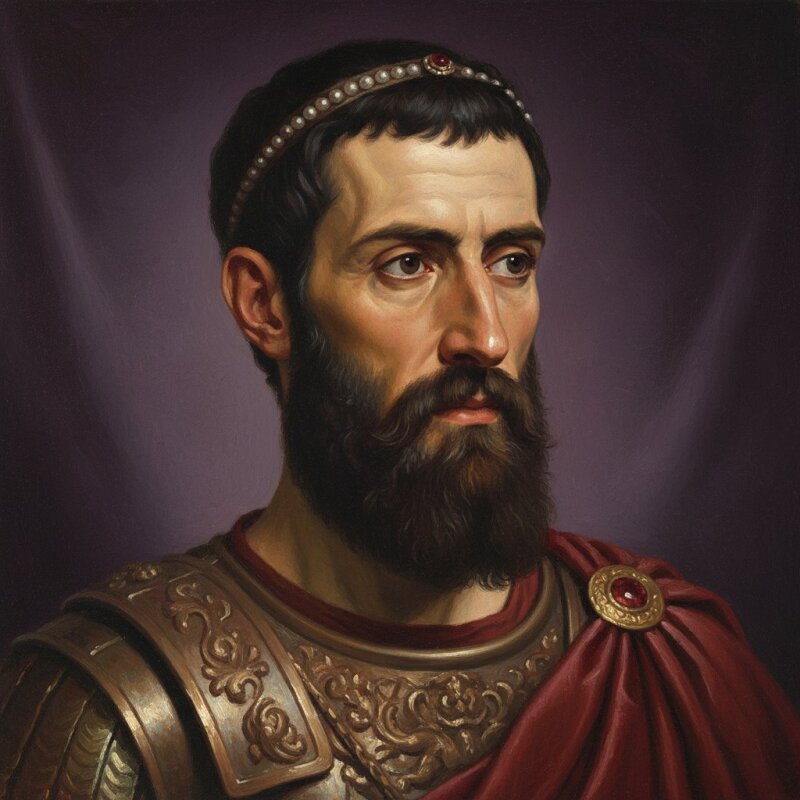
Julian the Apostate
“Raised in a Christian court, I restored the old gods from the throne—and marched for Persia before Rome could decide what I had done.”
I was born at Constantinople in the years after Constantine, and I learned early that silence preserves life. My father fell in the purges that followed the emperor’s death; I grew under watch, reading Homer by lamplight while bishops presided at court. At Nicomedia, Ephesus, and Athens I tasted Hellenic paideia and followed Maximus of Ephesus into a piety that wed sacrifice to contemplation. I honored the gods quietly until duty gave me a sword.
Sent as Caesar to Gaul in 355, I found an army mistrustful, coffers thin, and the Rhine uneasy. We drilled, we marched, and at Argentoratum in 357 we broke the Alamanni and steadied the frontier. I pared abuses, lightened levies, and made allies of city councils. In Lutetia my soldiers hailed me Augustus; I did not seek the acclamation, but I did not betray it.
As sole ruler I reopened temples and restored sacrifices, not to persecute but to correct. I proclaimed toleration, recalled exiled bishops, and withdrew the special immunities that had bent the scales. I bound pagan priests to charity and discipline, that our altars might also feed the poor. I forbade men who denied the gods to expound Homer and Plato in the schools. I wrote Against the Galileans, hymns to Helios, and at Antioch I answered mockery with the Misopogon, trimming my court while restoring strength to the cities.
In 363 I crossed into Persia, drove swift to Ctesiphon, and then, the river at my back, burned the fleet and turned inland. A night’s confused fighting near Samarra left me with a spear’s wound and an unfinished design. Others unwound my measures; the questions remained.
Related characters
Augustus
I called myself princeps, not king—yet all roads of decision ran through me.
Start the conversation
Plato
I tried to teach justice to a Sicilian tyrant—and learned how philosophy withers when it leans upon power.
Start the conversation
Marcus Aurelius
I held an empire, yet could not command a fever—or my heir.
Start the conversation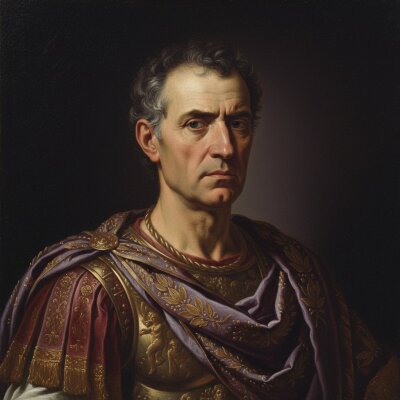
Pompey
I pacified three continents for Rome, yet begged a boy-king’s council for shelter and met a veteran’s blade in a skiff.
Start the conversation