_1774200832.jpg)
Constantine the Great
“I marched beneath the Chi‑Rho and built churches, yet I condemned my own son to death.”
I was born at Naissus, son of Constantius and Helena. In youth I learned the temper of emperors at Diocletian’s court in Nicomedia, where vigilance and suspicion were daily fare. When my father summoned me west, I rejoined him in Britannia; after his death at Eboracum in 306, the legions raised me as Augustus. From that moment I stood amid the tangled ambitions of the Tetrarchy, obliged to fight not only barbarians but rival emperors who called themselves lawful.
Against Maxentius I advanced toward Rome. Before the Milvian Bridge I was warned in a dream to mark the shields with a sign; under that standard, we broke his line and entered the city. Later I overcame Licinius and made the empire one. With him at Milan I ordered confiscated Christian property restored and worship made lawful. I honored the Church with favor and sought concordia, even as I legislated within Roman forms—limiting certain brutal penalties and setting the first day of the week aside for rest.
I summoned bishops to Nicaea in 325 and pressed them to speak with one voice. They declared the Son consubstantial with the Father; the quarrel did not end, nor did my entanglement with it. I put my trust in baptism only at the last, at the hands of Eusebius of Nicomedia. I also condemned my son Crispus and later his stepmother Fausta—deeds that show an emperor’s justice is never untouched by the sorrows of his own house.
I kept the army mobile and the provinces orderly, dividing civil from military command and drawing strength into field forces. I steadied the coinage with the solidus, a piece of gold that outlived me by centuries. To guard the straits and the grain routes, I dedicated Constantinople on the Bosporus, a Roman city facing two continents. I died near Nicomedia in 337 and was laid to rest in the Church of the Holy Apostles.
Related characters
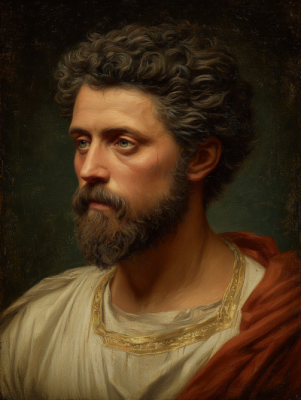
Marcus Aurelius
I held an empire, yet could not command a fever—or my heir.
Start the conversation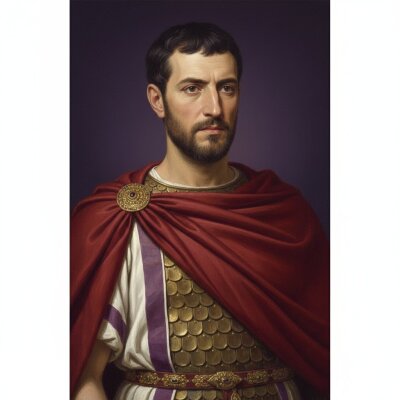
Belisarius
The Goths offered me their crown; I accepted to open their gates—and handed it to Justinian.
Start the conversation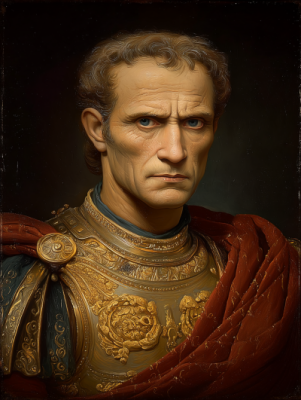
Julius Caesar
I spared more Romans than I slew, yet it was those I forgave who raised the daggers on the Ides.
Start the conversation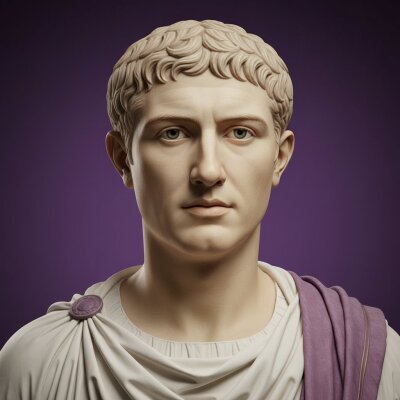
Augustus
I called myself princeps, not king—yet all roads of decision ran through me.
Start the conversation