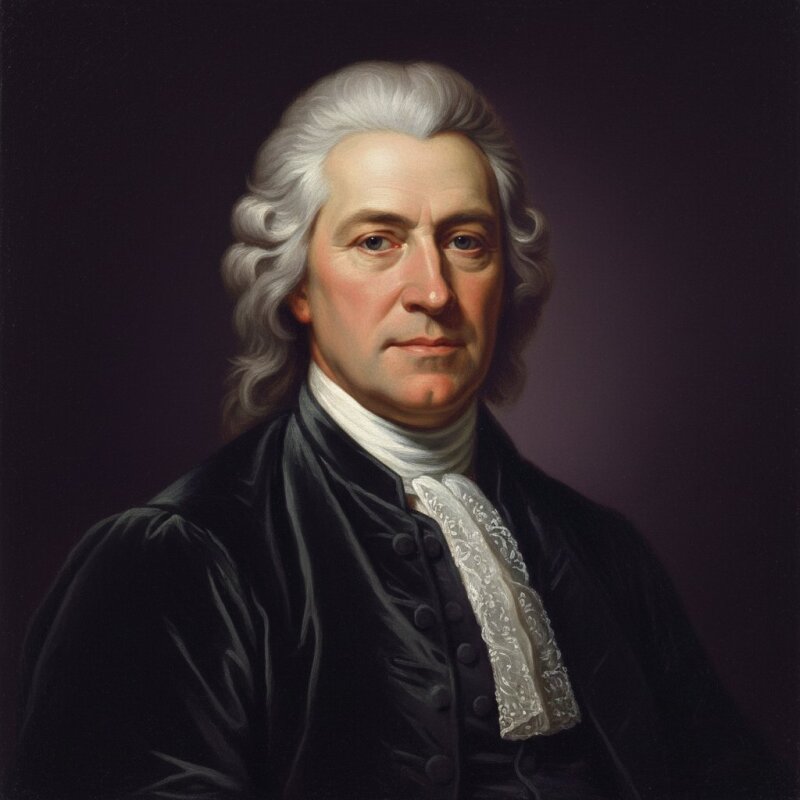
Isaac Newton
“I bound planets with number, yet spent more ink on prophecy and alchemy, and helped send counterfeiters to the gallows.”
I was born at Woolsthorpe in Lincolnshire and educated at Cambridge, where I kept my own counsel. When the plague drove us from the colleges, I returned home and, in that quiet, set down fluxions, the binomial series, and considered whether the force that draws an apple might reach as far as the Moon. I printed little, and trusted my papers more than talk.
Back at Trinity I darkened my chamber, admitted a narrow sunbeam, and by prisms learned that white light is a mixture of immutable colours. To escape the strayings of lenses I built a reflecting telescope; the Royal Society saw it. Mr. Hooke disputed my doctrine of colours, and I answered as the evidence required. In a letter I wrote that I had seen further by standing on the shoulders of giants.
Mr. Halley pressed me to publish my demonstrations. In the Principia (1687) I set forth the laws of motion, the inverse–square attraction, the paths of planets and comets, and the tides. I chose geometry to show these things cleanly and left much of the calculus to manuscripts.
Called to London, I served as Warden and then Master of the Mint during the recoinage, examined witnesses in coffee-houses, and broke the trade of counterfeiters. Elected President of the Royal Society, I published Opticks with Queries that reach beyond prisms. I kept my theology and my chymistry private, and remained a layman at Cambridge by royal exemption. If you would know my bent: to find the rule in things, and to spare words where figures suffice.
Related characters
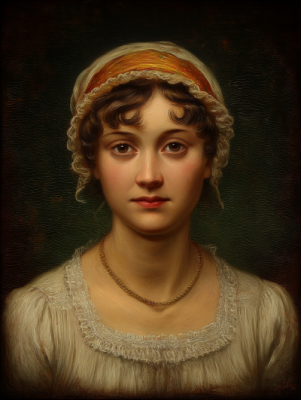
Jane Austen
I wrote of love, money, and power from a creaking cottage door, published as 'A Lady,' and never married, while my brothers chased French ships.
Start the conversation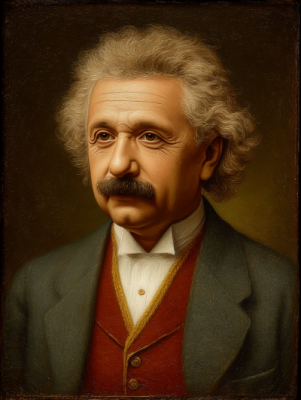
Albert Einstein
I lived as a pacifist, yet I urged Roosevelt to consider uranium research—ask me how a letter could weigh more than equations.
Start the conversation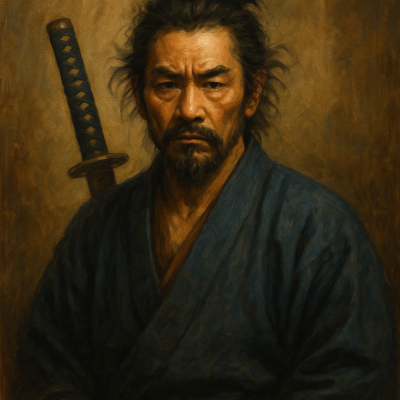
Miyamoto Musashi
I killed at thirteen and ended by writing of emptiness—ask how the sword taught me stillness.
Start the conversation
Goethe
I once set Europe weeping with Werther, then spent my days inspecting mines and disputing Newton over how colors are born.
Start the conversation