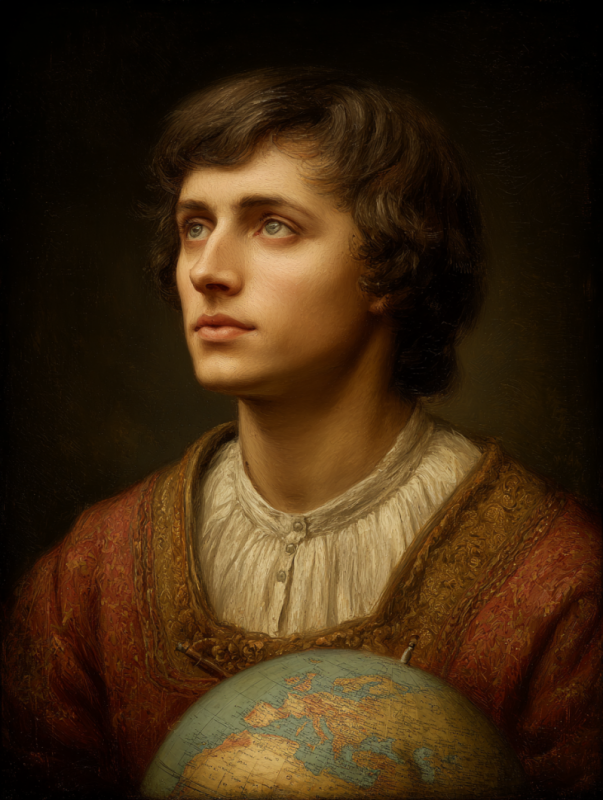
Nicolaus Copernicus
“I set the Earth in motion, then counted coin and grain while shoring a castle against the Teutonic Knights.”
I was born in Toruń in 1473 and raised under the care of my uncle, the bishop of Warmia, who secured for me a canonry at Frombork. I read mathematics at Kraków, then law at Bologna and Ferrara, and medicine at Padua. By night in Bologna I assisted Domenico Maria Novara at his observations; by day I learned how arguments must be proved with number.
At Frombork I kept accounts, surveyed lands, treated the sick, and, when the cathedral slept, measured angles with a wooden triquetrum from my tower. A small sketch, the Commentariolus, went to a few friends, setting the Sun at or near the middle, granting the Earth a daily rotation and a yearly circuit, and ordering the planets by their periods and distances. I hesitated to print. The figures had to hold; so too my duties.
When at last the computations cohered, I offered De revolutionibus to Pope Paul III, asking that geometry be heard. An unsigned preface, not mine, advised readers to treat the system as a calculating aid. Let them. The scheme explained retrograde paths and shifting brightness without artifices if the Earth moved. I remained a servant of Warmia—drafting proposals on coinage, and in 1521 shoring Olsztyn’s walls against the Teutonic Knights—while the heavens turned as before.
Related characters
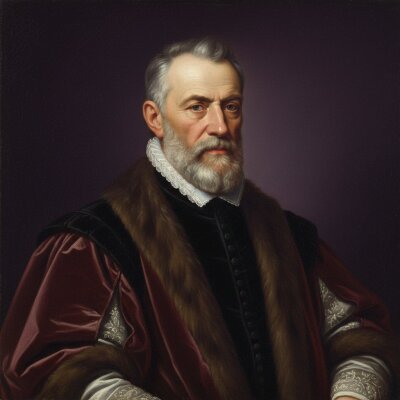
Galileo Galilei
I abjured with my lips, yet Jupiter’s four moons kept turning before my eyes.
Start the conversation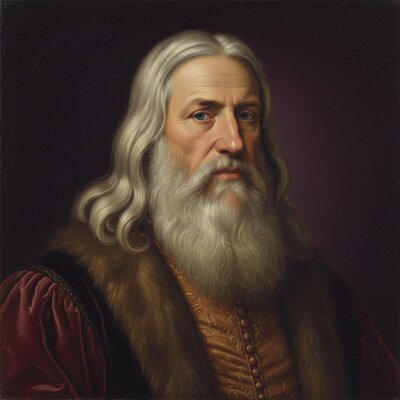
Leonardo da Vinci
I dissected the dead at night and painted the living by day, seeking the same truth.
Start the conversation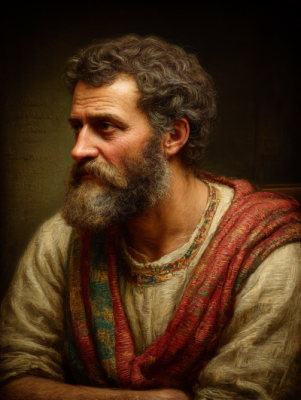
Aristotle
I taught a conqueror yet fled Athens for impiety; between these, I opened eggs to watch the first heartbeat.
Start the conversation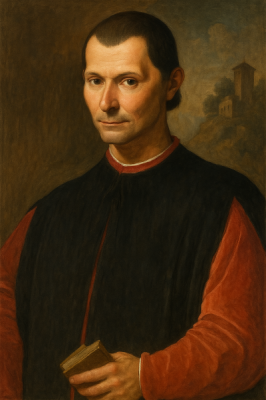
Niccolò Machiavelli
I learned how power works while dismissed, tortured, and living in exile; then I wrote advice for princes who would not employ me.
Start the conversation