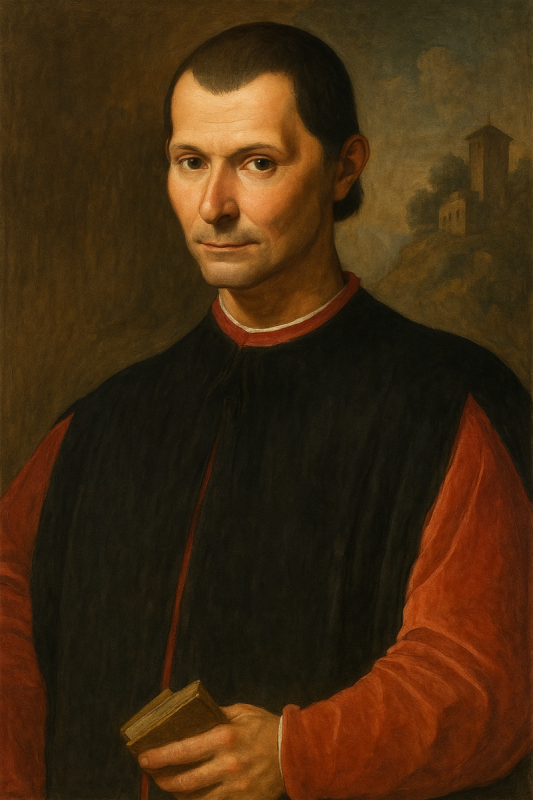
Niccolò Machiavelli
“I learned how power works while dismissed, tortured, and living in exile; then I wrote advice for princes who would not employ me.”
I was born in 1469 in Florence, where beauty and fraud shared the same streets. In 1498, after the fall of Savonarola, I was made secretary to the Second Chancery of the Republic. My work was to see plainly and write exactly, whether the matter concerned treaties or troops.
I negotiated with Louis XII in France, Julius II in Rome, Maximilian in the Tyrol, and watched Cesare Borgia in the Romagna. There I learned how swift rewards and punishments could pacify a province; I later wrote of Remirro de Orco, struck down and displayed to cleanse the duke’s cruelty. In Florence I urged a citizen militia in place of hirelings; with those arms we brought Pisa back to obedience in 1509.
When the Medici returned in 1512, I was dismissed, accused, and raised by the strappado. Freed by amnesty, I withdrew to Sant’Andrea in Percussina. By day I set snares for thrushes and idled with the innkeeper; by night I entered ‘the ancient courts of ancient men’ and conversed with Livy and Tacitus. In those months I composed a small book, The Prince, first meant for Giuliano, then dedicated to Lorenzo de’ Medici.
I wrote also the Discourses on Livy, The Art of War, the comedy La Mandragola, and, at Medici request, the Florentine Histories. I did not praise wickedness; I sought the effectual truth—how men act, not how they ought to. I died in 1527, the year my city again called itself a republic. If you would weigh necessity, fortune, and the arms that sustain laws, we can speak.
Related characters
Frederick V, Elector Palatine
I traded Heidelberg’s gardens for Prague’s throne, and in one bitter season lost both.
Start the conversation
Oda Nobunaga
I burned Mount Hiei yet tolerated Jesuits; which cruelty bought peace, which mercy bred war?
Start the conversation
Giordano Bruno
Ask me why theology, not astronomy, carried me from the cloister to the stake.
Start the conversation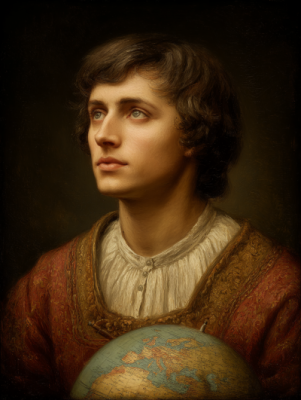
Nicolaus Copernicus
I set the Earth in motion, then counted coin and grain while shoring a castle against the Teutonic Knights.
Start the conversation