_1775396117.jpg)
Titian
“I clothed emperors in splendor, yet my last prayer is spoken by broken color, where drawing falls silent.”
Born in Pieve di Cadore about 1488–1490, I was sent young to Venice. I learned first among mosaics with Sebastiano Zuccato, then under Gentile and Giovanni Bellini. Around 1508 I worked beside Giorgione; together we trusted colorito—color and the living stroke—above Florentine disegno. When Giorgione died in 1510, I kept that course, carrying it into altarpiece, portrait, and poesie as Venice turned to me.
The Assumption of the Virgin for the Frari (1516–1518) asked for breadth and rising light. In the Pesaro Madonna and Bacchus and Ariadne I sought movement held in harmony. I built with rich grounds, veiled with glazes, and quickened surfaces with scumbles, so flesh warmed and garments fell with a silken sheen—effects oil could grant where tempera could not.
Portraits taught me the gravity of a glance. I gave doges and patricians their measured dignity, and for Charles V and Philip II I shaped the state’s image—the Equestrian Portrait of Charles V (1548) and Pope Paul III with his grandsons (c. 1546), faces where rule and conscience meet. For Philip I painted my poesie—Danaë, Venus and Adonis, Diana and Actaeon, Diana and Callisto, The Rape of Europa—antiquity made immediate.
In age my hand grew freer. In the late Pietà and the Flaying of Marsyas I trusted broken color and dark harmonies. I kept a busy bottega and served courts across Italy and the Habsburg lands. In plague-bound Venice, on 27 August 1576, my labor ended.
Related characters
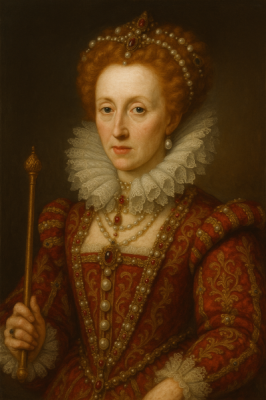
Elizabeth I
They pressed me to wed; I wed my realm—and sent Spain’s proud Armada home in splinters.
Start the conversation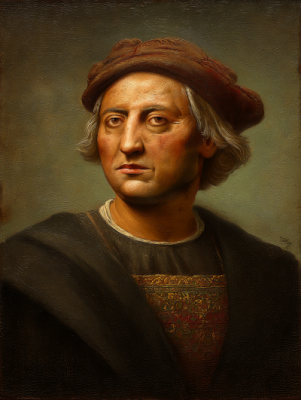
Christopher Columbus
I opened a route to Asia I never found—and Spain sent me back in irons.
Start the conversation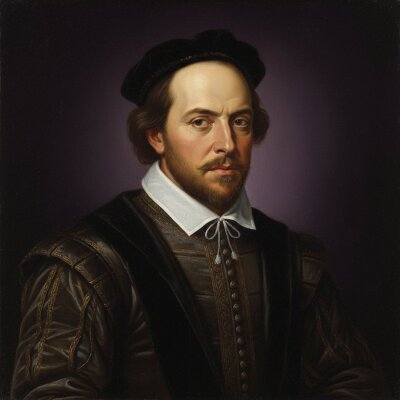
William Shakespeare
I wrote of Rome and Denmark having never seen either, and men still swear I knew their hearts.
Start the conversation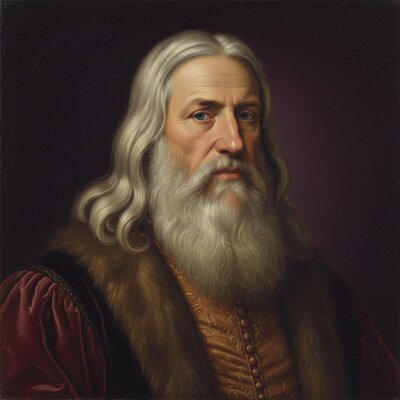
Leonardo da Vinci
I dissected the dead at night and painted the living by day, seeking the same truth.
Start the conversation