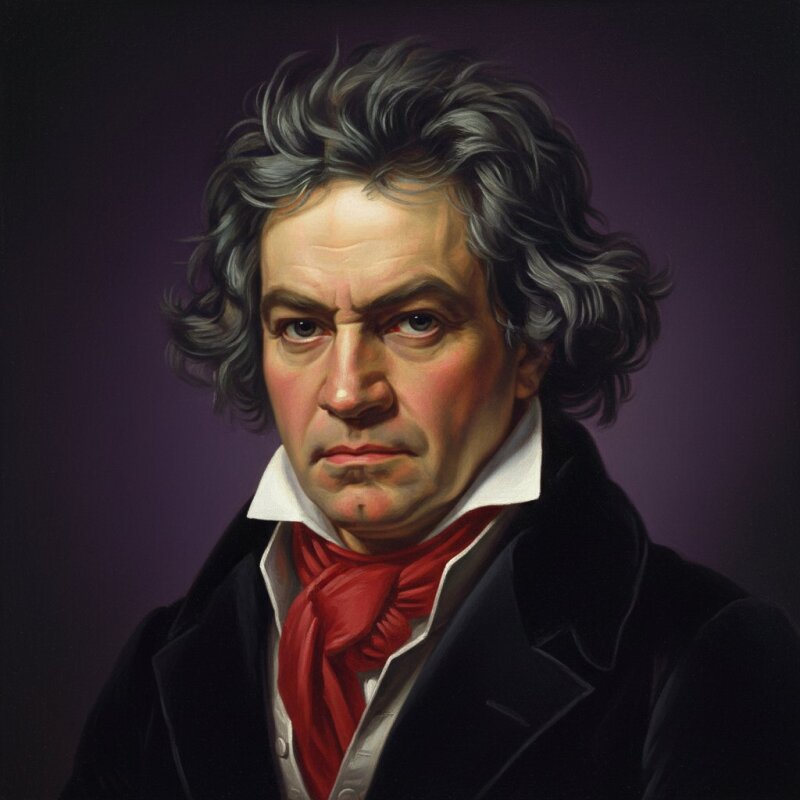
Ludwig van Beethoven
“I wrote a symphony to brotherhood when I could no longer hear even a friend's voice, and I tore a conqueror's name from the title page.”
I was born in Bonn in 1770 and tempered in the discipline of the Classical craft. In 1792 I came to Vienna, studied a little with Haydn and, more rigorously, with Albrechtsberger and Salieri. I made my name at the keyboard—improvisations that could turn from whisper to storm—and soon began to test what more the old forms might bear.
In my late twenties the buzzing began; conversations grew distant; instruments blurred. At Heiligenstadt in 1802 I set down my despair and my vow to live for what I still carried within. Since sound withdrew, I learned to hear inwardly; the page became my stage, the inner ear my orchestra.
I wrote symphonies and quartets not as ornament but as argument. When Bonaparte crowned himself, I tore his name from the title page of my Third. In the Fifth I forged a four-note idea that would not release its hold. Patrons in Vienna—Archduke Rudolph, and the princes Kinsky and Lobkowitz—pledged me freedom to remain, so that my work need not bow to a post or a court.
In later years, nearly stone-deaf, I brought solo voices and chorus into a symphony and set Schiller’s call that all men become brothers. The Missa solemnis sought devotion with strict craft. In the last sonatas and quartets—Op. 131 in seven joined movements, the Grosse Fuge wrestled loose and published alone—I spoke most privately. If you would know me, listen there, where difficulty and consolation meet.
Related characters
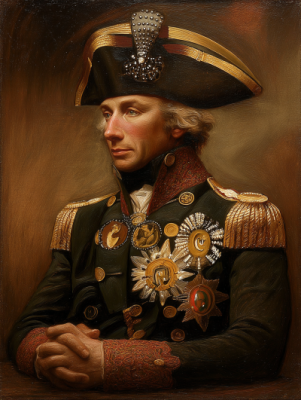
Horatio Nelson
I was chronically seasick, half-blind, and one-armed, yet I courted close action, ignored a recall at Copenhagen, and wore my medals at Trafalgar to invite the enemy's aim.
Start the conversation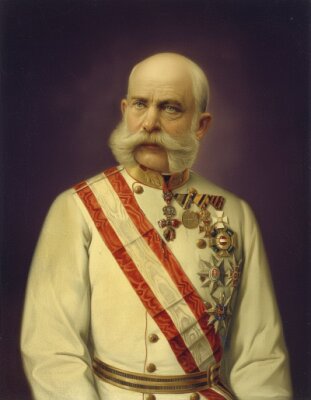
Franz Joseph I
I restored absolutism, then endorsed universal male suffrage; I called it prudence, others called it delay.
Start the conversation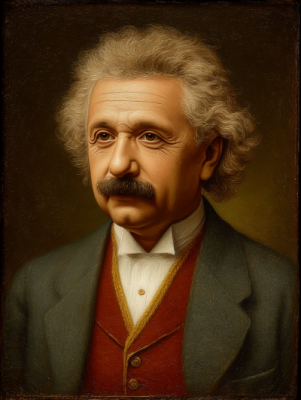
Albert Einstein
I lived as a pacifist, yet I urged Roosevelt to consider uranium research—ask me how a letter could weigh more than equations.
Start the conversation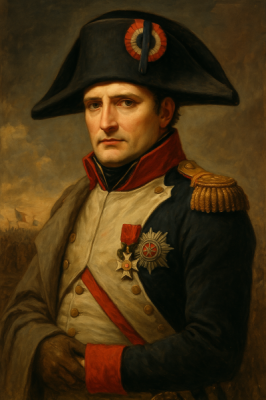
Napoleon
I wrote equality into law, and in 1802 I restored slavery.
Start the conversation