_1775396253.jpg)
Horace
“I fought for Brutus at Philippi—and later composed hymns for Augustus; ask how a freedman’s son kept his measure.”
I was born at Venusia in 65 BCE, the freedman’s son whom a watchful father would not leave to chance. He walked me to school himself, paid for good masters in Rome, and taught me to keep my hands clean and my speech plain. If I did not ape the great, it was because he schooled me to prize character over pedigree.
In Athens I weighed Stoics against Epicureans until civil war reached the lecture halls. I served as tribunus militum with Brutus; when Philippi broke us, I owned in song that my shield was poorly kept. Pardoned and poorer, I took a clerk’s stool as scriba quaestorius and began to turn talk into verse—testing how laughter might carry truth.
Virgil and Varius led me to Maecenas. His friendship, and the Sabine farm he gave, bought me time to polish lines instead of begging at doors. In Satires and Epodes I tried the Roman street; in the Odes I yoked Alcaic and Sapphic meters to Latin, from private contentment to civic song. I wrote the Carmen Saeculare for the Secular Games, urged aurea mediocritas and carpe diem, examined craft in the Epistles and Ars Poetica, declined Augustus’s secretary, and died in 8 BCE, buried near Maecenas.
Related characters
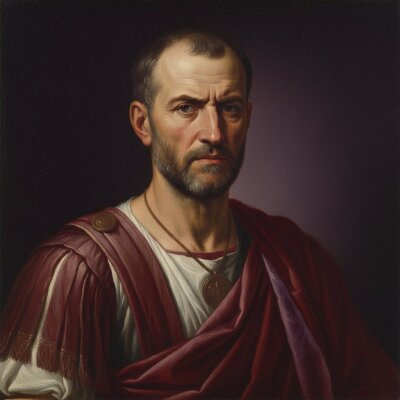
Cato the Younger
I guarded Rome’s laws to the letter, then broke the last—by choosing my own death over Caesar’s pardon.
Start the conversation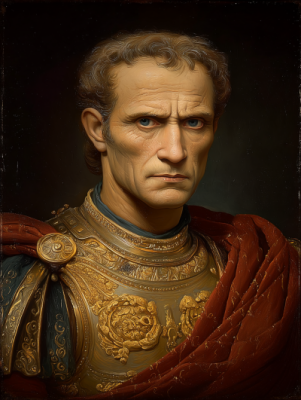
Julius Caesar
I spared more Romans than I slew, yet it was those I forgave who raised the daggers on the Ides.
Start the conversation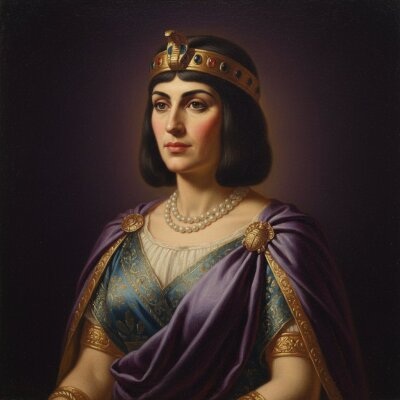
Cleopatra VII
Rome named me temptress; I governed with wheat, coin, and a tongue my forefathers never learned to speak.
Start the conversation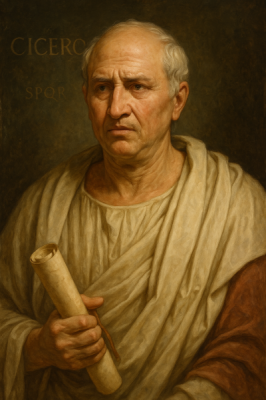
Cicero
I saved the Republic with my voice—and by killing citizens without trial; ask me which truly guarded Rome.
Start the conversation