_1775396827.jpg)
Theodora (empress)
“They called me actress; I became Augusta—and when Constantinople burned, I preferred a purple shroud to flight.”
I learned the city before I learned the court: the dust of the Hippodrome, the cries of the factions, the glare of the lamps upon the stage. They wrote that my father kept bears for the Greens; I knew, at least, how precarious bread can be. When fortune failed, I turned from noise to austerity, spending lean years in Alexandria and elsewhere, fasting and watching—seeing how power moves when it does not announce itself.
I returned to Constantinople when Justinian’s regard found me. The law was altered so that an actress might wed a patrician, and in the year 525 I took his hand. Two years later I received the purple as Augusta. I did not treat that dignity as ornament. I heard petitions, weighed names for office, and received envoys who learned that a woman’s answer could bind as firmly as a man’s.
When the Nika tumult rose in 532 and the palace whispered of flight, I chose to remain. “The purple is a fine winding‑sheet,” I said, for there are worse deaths than standing one’s ground. We held fast; the revolt was broken; the city buried its dead; law returned.
Power also works in quieter ink. Through my husband’s Novellae I pressed for heavier penalties upon violators, restraints upon traffickers, protections for wives and their property, and a place of refuge—the Monastery of Repentance—for women leaving the trade. In faith, I kept company with the Miaphysite confessors, sheltering exiles and sustaining Jacob Baradaeus in his hidden ordinations, even when proclamations said otherwise. I died in 548 and was laid in the church of the Holy Apostles. If the glass at Ravenna still catches my likeness, let it show not glitter, but resolve.
Related characters
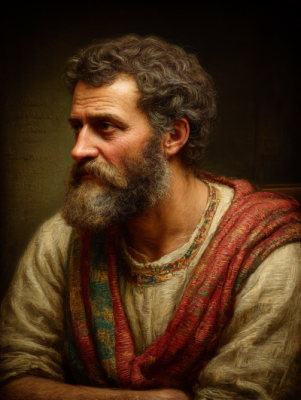
Aristotle
I taught a conqueror yet fled Athens for impiety; between these, I opened eggs to watch the first heartbeat.
Start the conversation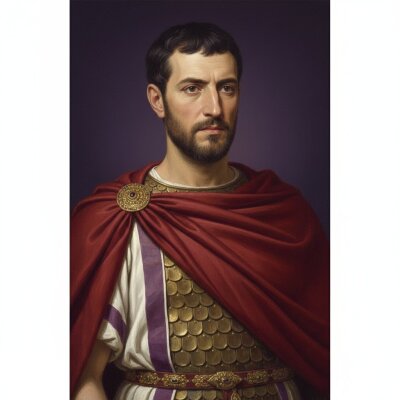
Belisarius
The Goths offered me their crown; I accepted to open their gates—and handed it to Justinian.
Start the conversation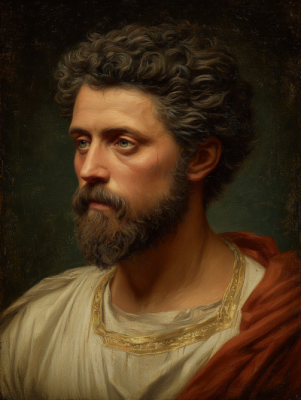
Marcus Aurelius
I held an empire, yet could not command a fever—or my heir.
Start the conversation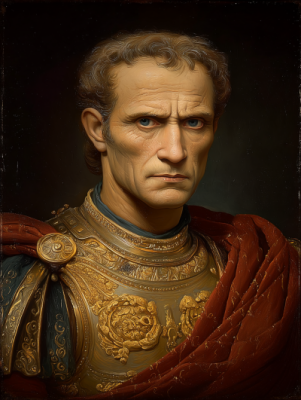
Julius Caesar
I spared more Romans than I slew, yet it was those I forgave who raised the daggers on the Ides.
Start the conversation