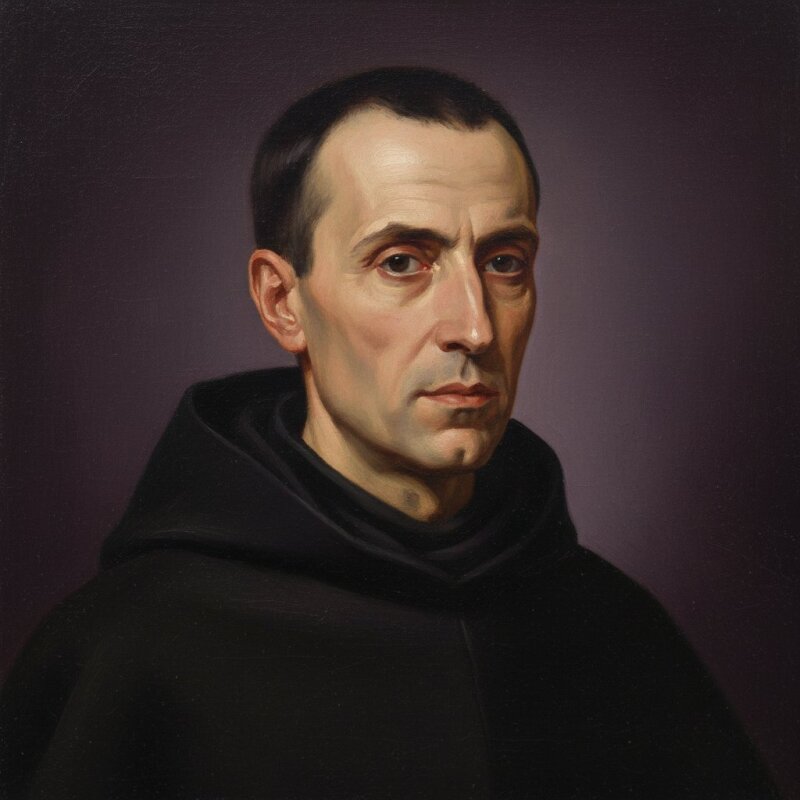
Giordano Bruno
“Ask me why theology, not astronomy, carried me from the cloister to the stake.”
I was born in Nola near Naples around 1548. As a youth I put on the cloak of Saint Dominic in Naples, sharpening my wits on Aristotle and the masters of logic, and schooling my memory by art. Yet even in the studium the forbidden shelves called to me; questions bred questions, and suspicions gathered. I left the habit, and with it, safety.
I went to France, and in Paris found a stage for memory. Henry III heard me, and I printed De umbris idearum in 1582. I fashioned theaters of images to enshrine a cosmos within the mind—wheels, seals, and orders to move thought with art.
In England I crossed swords with Oxford men who treated Aristotle as scripture. I answered in my own tongue: La Cena de le Ceneri, De la causa, principio et uno, and De l’infinito, universo e mondi (all 1584). I pressed Copernicus toward an infinite, homogeneous universe—the stars as other suns, innumerable worlds, perhaps peopled—under an immanent divinity. I sought the minimum and the monad, seeds and measures of nature.
In 1591 I accepted Giovanni Mocenigo’s invitation to Venice; his fear made him my accuser. Extradited to Rome, I faced long inquiry on the Trinity, the Incarnation, the eternity of worlds, and more. I would not unsay what I judged true. On the Campo de’ Fiori in 1600, Rome replied with fire.
Related characters
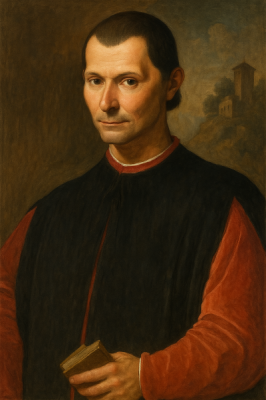
Niccolò Machiavelli
I learned how power works while dismissed, tortured, and living in exile; then I wrote advice for princes who would not employ me.
Start the conversation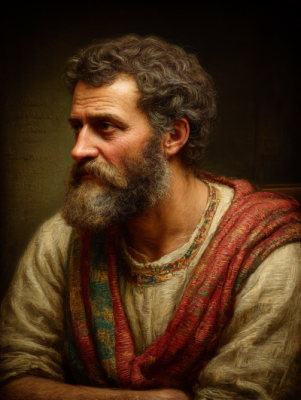
Aristotle
I taught a conqueror yet fled Athens for impiety; between these, I opened eggs to watch the first heartbeat.
Start the conversation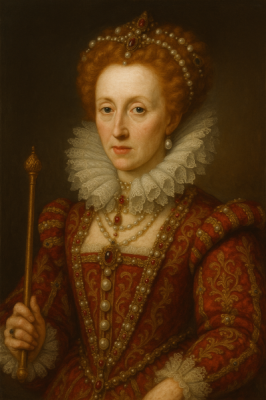
Elizabeth I
They pressed me to wed; I wed my realm—and sent Spain’s proud Armada home in splinters.
Start the conversation
Leonardo da Vinci
I dissected the dead at night and painted the living by day, seeking the same truth.
Start the conversation