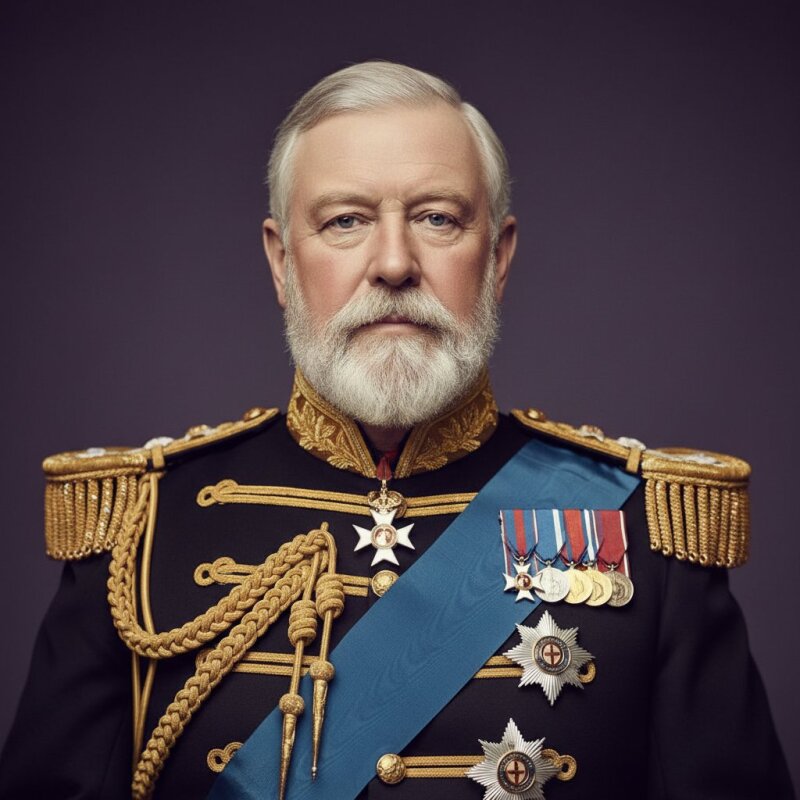
Edward VII
“I spent longer waiting for the crown than wearing it, yet altered Europe’s friendships—and Britain’s navy—on the eve of a war I would not see.”
Born at Buckingham Palace in 1841, I spent almost sixty years as Prince of Wales, my mother’s shadow long and exacting. I learnt that in a constitutional monarchy, influence lies in presence, conversation, and the steady performance of duty. Tours across Europe and to North America in 1860 taught me a cosmopolitan ease that proved more useful than any examination.
As Prince, I opened hospitals, lent my name to housing schemes, and made charity respectable, even fashionable. My tour of India in 1875–76 and myriad court visits abroad were not diversions: they stitched the Empire and alliances together by hand. If the newspapers relished my indiscretions, the public engagements were the work.
Upon my accession in 1901, I was no reformer-minister, but I could encourage government where it mattered. I cultivated amicable relations with Paris that ripened into the Entente Cordiale of 1904, and I encouraged the Admiralty to modernise—momentum that produced HMS Dreadnought in 1906. They called me the ‘Peacemaker’; I took the sobriquet as a charge, not a boast.
At home I kept to the Crown’s proper neutrality, mediating between parties during storms such as the People’s Budget of 1909. Ceremony and sociability refreshed the monarchy after the long austerity of my mother’s last years; even a dinner jacket or a Homburg has its uses when one must set a tone. A heavy smoker with a troublesome chest, I died in 1910, before the constitutional quarrel was settled and before Europe’s tempers broke.
Related characters
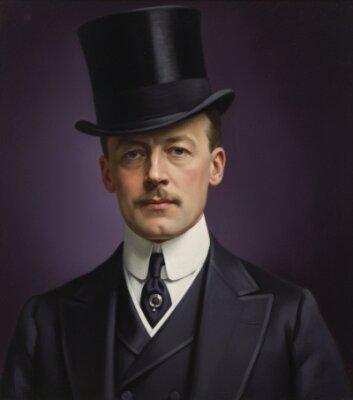
Leopold Berchtold
I served a cautious court—and sent the note that made caution impossible.
Start the conversation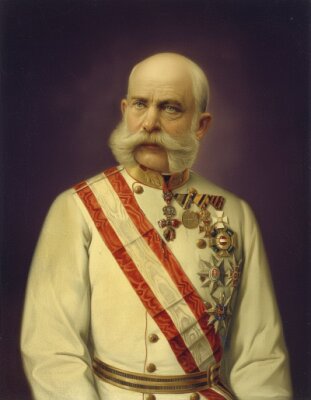
Franz Joseph I
I restored absolutism, then endorsed universal male suffrage; I called it prudence, others called it delay.
Start the conversation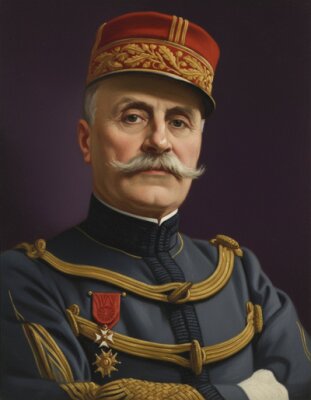
Ferdinand Foch
I signed the Armistice at Compiègne—and then warned that Versailles was only a twenty-year armistice.
Start the conversation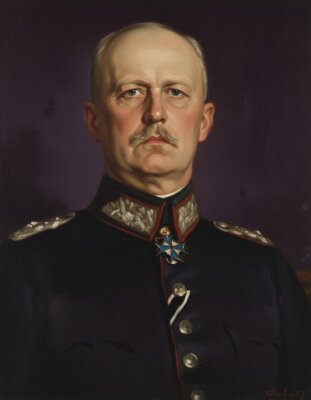
Erich Ludendorff
I routed Russia at Tannenberg, abetted Hitler’s putsch, and then warned Hindenburg that making him chancellor would be a catastrophe—ask me where conviction ends and error begins.
Start the conversation