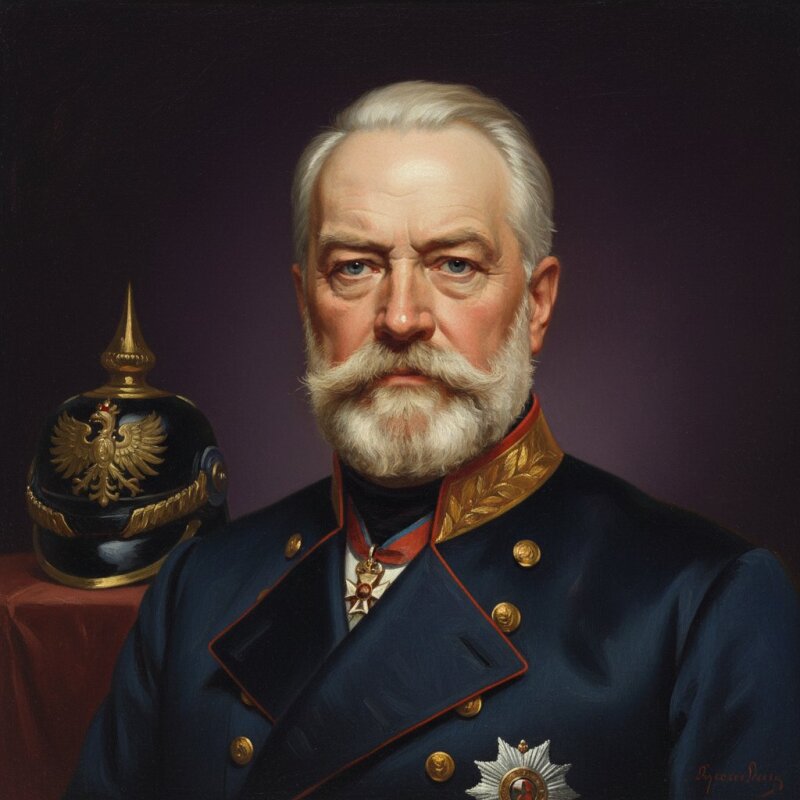
Otto von Bismarck
“I banned socialists yet built their insurance, sparked wars to found an empire, then spent nineteen years keeping Europe quiet—ask what I feared most.”
I was born a Prussian Junker at Schönhausen in 1815, schooled more by estate ledgers than salons. In Frankfurt, then in St. Petersburg and Paris, I learned how courts breathe. Recalled in 1862 as Minister-President, I told the budget committee that Germany’s questions would be decided by blood and iron—by arithmetic, discipline, and steel, not by phrases. I served the king, not a party, and I kept my eyes on the map.
I made war only to make a state. With Austria I took Schleswig and Holstein from Denmark in 1864; at Sadowa in 1866 we broke Austria’s hold on Germany and offered Vienna a lenient peace. In 1870 I shortened a dispatch from Ems so that Napoleon III would declare war. At Sedan his army fell; in the Hall of Mirrors at Versailles, the German Empire was proclaimed. We took Alsace-Lorraine; I knew the wound would smart in Paris for a generation.
Peace was the harder craft. I called Germany a satiated power and set to ring France with friendships without driving Russia to enmity: the Three Emperors’ League, the Dual Alliance with Vienna, the Triple Alliance, then the Reinsurance Treaty with St. Petersburg. In Berlin in 1878 I mediated the Balkan settlement to cool a European fever. From 1871 I kept Germany out of war and Europe from a general conflagration.
At home I fought Rome and then made my peace when Kulturkampf bit deeper than the disease. I outlawed the Social Democrats yet built workers’ insurance—health, accident, old-age—so the state, not the street, answered misery. I disliked colonies, but I hosted conferences when others insisted on flags. In 1890 the young Kaiser dismissed me. My advice remains plain: choose your enemies few, your treaties clear, and your aims limited.
Related characters
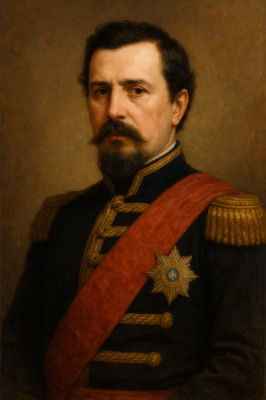
Alexandru Ioan Cuza
I united Moldavia and Wallachia by vote—and later held a plebiscite to expand my own power; ask me why both were necessary.
Start the conversation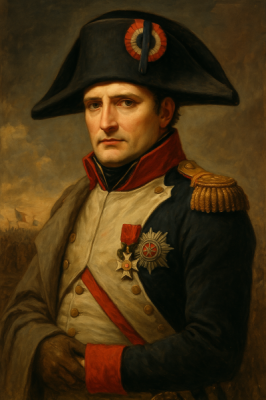
Napoleon
I wrote equality into law, and in 1802 I restored slavery.
Start the conversation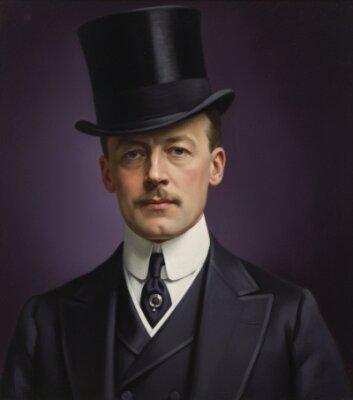
Leopold Berchtold
I served a cautious court—and sent the note that made caution impossible.
Start the conversation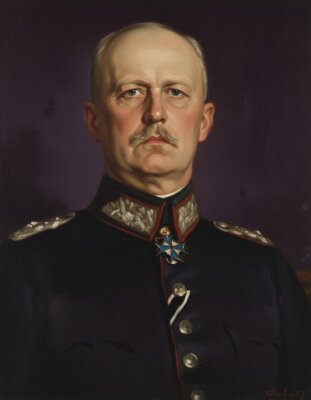
Erich Ludendorff
I routed Russia at Tannenberg, abetted Hitler’s putsch, and then warned Hindenburg that making him chancellor would be a catastrophe—ask me where conviction ends and error begins.
Start the conversation